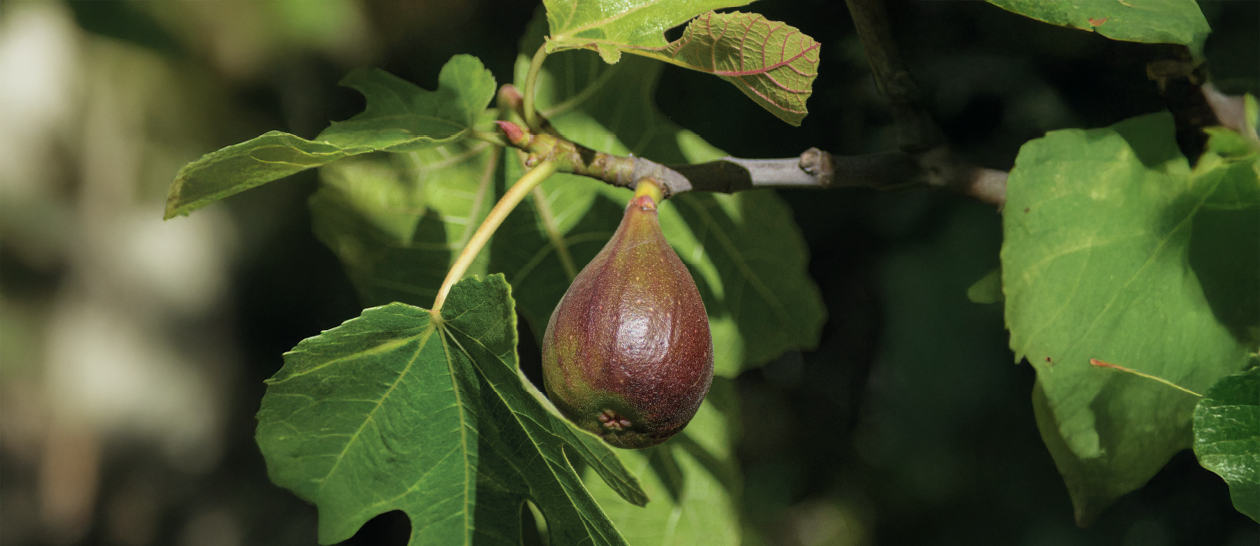
BHUVARAGASAMY RATHINASABAPATHY and ANANTHANENI SREENATH explore the hidden world of Ficus—keystone trees whose secret blooms, faithful wasps, and unwavering generosity sustain Kanha’s forests through every season.
Ficus—silent architects of forest life,
feeding the forest when times are scarce.
Ficus—The Keystone of Forest Life
At Kanha Shanti Vanam, 24 species of fig trees (Ficus spp.) thrive, forming the backbone of the forest ecosystem. Often called keystone species, figs provide food and shelter to a wide range of fauna—from birds, bats, and butterflies to monkeys and insects. Their unique year-round fruiting ensures a continuous food supply, sustaining wildlife even during scarce seasons. By nurturing this diversity, the Ficus trees play a vital role in maintaining ecological balance and enriching Kanha’s biodiversity.
Why Do Fig Trees Fruit in Pre-Summer?
When the land begins to dry, the figs start to feed. They fruit precisely when scarcity peaks, ensuring no life is left unfed. The summer heat accelerates fruit ripening and dispersal, while the sacred fig wasps emerge exactly on cue. Soon after, the monsoon arrives—and the forest is reborn.
A Bloom the World Cannot See
Figs never show their flowers. They bloom inward, hidden within the syconium—a secret universe of hundreds of microscopic flowers. Only one being may enter: a fig wasp, born for this one sacred act.
This is one of evolution’s most intimate relationships: one fig and one wasp, forever bound.
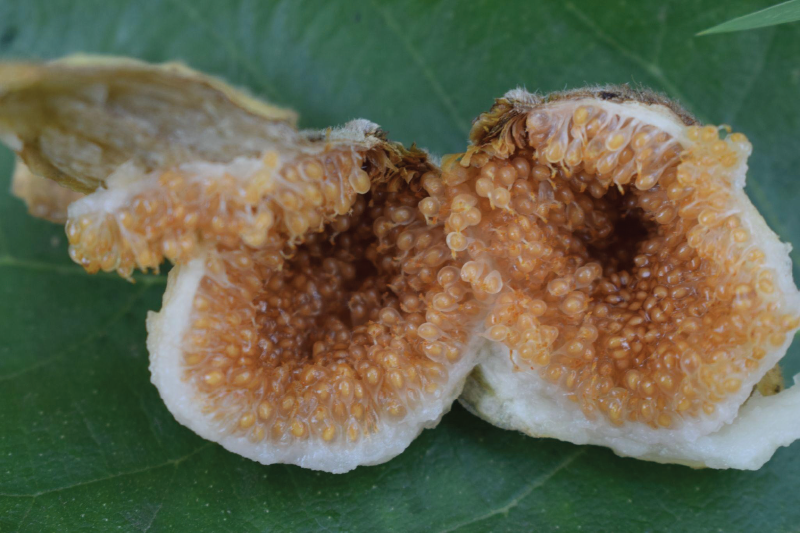
Fig-Wasp Mutualism: A Perfect Partnership
Each species of fig tree at Kanha has its own unique pollinator wasp, ensuring precise and effective pollination. Here’s how the cycle unfolds:
- Entry Through the Ostiole: A female fig wasp enters the syconium through a small opening called the ostiole, carrying pollen from another fig tree.
- Pollination and Egg-Laying: While depositing eggs inside certain flowers, the wasp inadvertently pollinates others.
- New Generation Emerges: The next generation of wasps matures within the fig, males emerging first to mate with the females before they exit, carrying pollen to another fig tree to repeat the cycle.
- Seed Development: Flowers that wasps do not use develop into seeds, ensuring the propagation of fig trees.
Fig trees prepare the feast before
the forest knows it needs one.
Fig Highlights from Kanha
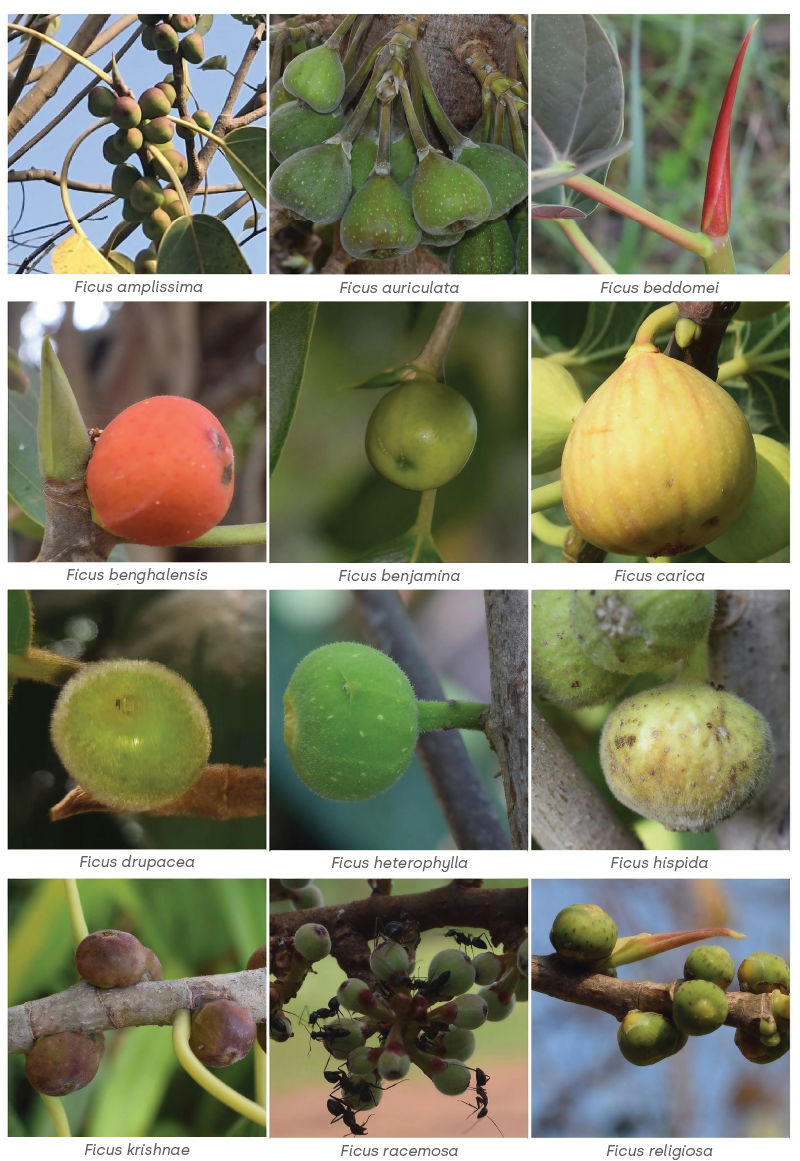
- Banyan (Ficus benghalensis): a cathedral-like canopy, feeding parakeets, orioles, squirrels, and bats.
- Peepal (F. religiosa): ever-fruiting, oxygen-giving, revered across faiths.
- Cluster Fig (F. racemosa): trunk-fruiting miracle of streamside forests.
- Indian Bat Fig (F. amplissima): beloved by fruit bats, perfect rewilding pioneer.
- Elephant Ear Fig (F. auriculata): among the tastiest figs—with leaves large enough to shelter dreams.
- Krishna Fig (F. krishnae): sacred, mythic, with butter-cupped leaves of legend.
Most fig fruits are edible, nourishing wildlife and humankind alike. People also value figs for their taste and health benefits. They can be sweet or tangy and are eaten fresh or dried in many dishes. Species like the Common Fig (Ficus carica), Peepal (Ficus religiosa), and Banyan (Ficus benghalensis) all produce useful fruits. Because of their wide variety, fig trees feed both people and wildlife, making them a vital part of tropical and subtropical forests.
Sit beneath a fig tree. Do nothing.
Say nothing. Feel the forest breathing through you—
in light, in stillness, in love.
Seeds That Travel Beyond Imagination
Birds. Bats. Monkeys. They carry figs, and with them, they support forests. That is why fig saplings are found on temple walls, ruined forts, and forgotten shrines. Where humans abandon, figs begin again.
Sacred, healing, timeless
- Bodhi Tree: Awakening of the Buddha.
- Peepal: Meditation sanctum of the Rishis.
- Banyan: Symbol of eternal life.
- Krishna Buttercup: Essence of Krishna’s Grace.
The Ficus is honored in Ayurveda and folklore, and revered as a symbol of stillness. Many meditators report feeling a living peace while sitting beneath its branches.

B. Rathinasabapathy
B. Rathinasabapathy is an ecologist with 37 years of experience in forest restoration, biodiversity conservation, and environmental education. He has led ecological projects across India, including the Western... Read More
