
A Dialogue on Grace, Pranahuti, Shaktipath, and Prana-Pratishtha
DAAJI clarifies four transformative processes— and why grace stands apart—compiled by APOORVA PATEL from a dialogue with SUCHIT R. and KESAV S.
Suchit: Daaji, in Heartfulness practice, we hear and read a lot about pranahuti. How is it different from other types of spiritual transmission, such as prana-pratishtha or shaktipath?
Daaji: That’s a lovely point to start with. You see, pranahuti is very different from other practices, even though people often mix them up. Let me tell you about four different realities: pranahuti, prana-pratishtha, shaktipath, and grace. Each has its own nature, specific mechanisms, and purposes.
Apoorva: Seekers of spirituality might assume that the four of those are just different forms of the same thing—ways of infusing divinity into the material world, right?
Daaji: That’s what most people get wrong. Let’s look at each one and see how wonderfully different they are. Firstly, there’s pranahuti, which is the basis of our Sahaj Marg [Heartfulness] practice. In Sanskrit, pranahuti means the offering of prana, or the life force. In our system, as Babuji defined it so clearly, it is the use of Divine power to change people. This is not philosophy! It is real life.
Kesav: How exactly does pranahuti work?
Daaji: Pranahuti flows directly from the heart of a Master of caliber to the heart of the person who receives it. But the important part is, this transmission is initiated by the power of will. The Master’s conscious will creates two main types of spiritual effects. The first is the ridding of obstacles, in which samskaras, or impressions that get in the way of growth, are broken down. The second effect is the creation of spiritual states. Pranahuti can directly create or bring about certain spiritual states in the aspirant, thereby raising their consciousness. Its effect is a progressive, systematic transformation.
Kesav: But what is being transmitted? What is the energy?
Daaji: Pranahuti means “life of life” or the prana of prana itself. Thus, pranahuti is not ordinary vital energy, but the most refined, divine essence. You can call it divine energy, ultimate energy, or the most subtle consciousness. This is what makes pranahuti so special—it is what we call “forceless force,” or “powerless power.”
Apoorva: But that sounds like a contradiction of itself!
Daaji: It does, but these contradictory words capture its essence perfectly. You see, pranahuti works without causing any resistance or reaction, unlike regular force. Let’s take an example. What would happen if you reprimanded your children harshly, really shouting at them?
Apoorva: They would react immediately, by getting very upset or defensive.
Daaji: Exactly. Force makes people react, but does it actually change them? Usually not. Force always causes an instantaneous reaction, but love can change people without making them react. Pranahuti is the process by which divine love is poured into our hearts. As it is not forced, it will work over infinite distances and through all of time. Love alone can act, breaking all barriers.
Kesav: And what is the “powerless power” referring to?
Daaji: It can be used to describe the Center, or God, which doesn’t really have power on its own. But powerlessness includes the idea of power that is stuck, as is the case at the Center. This means that the stagnant or static state, which is seen as powerlessness, is the real source of power.
Pranahuti means “life of life” or the prana of prana itself.
Thus, pranahuti is not ordinary vital energy,
but the most refined, divine essence.
You can call it divine energy, ultimate energy,
or the most subtle consciousness.
This is what makes pranahuti so special—
it is what we call “forceless force,” or “powerless power.”
Suchit: And what about prana-pratishtha? I’ve heard about this, but I’m not sure I’ve understood what it means. Is it the same as pranahuti?
Daaji: This is where many people get confused. While prana-pratishtha is a religious ceremony, it is very different from what we do in Sahaj Marg. Here you would see pujaris, or priests, perform rituals to “install” prana into an idol or maybe a sacred image. They do this by reciting specific mantras to call on the divine presence. They are essentially turning a statue into a living embodiment of the deity, making it worshipable. It depends on external ceremony, on mantras, on things outside the body. The whole point of it is to make some object the focus of worship.
Suchit: Whereas pranahuti works from within, from heart to heart.
Daaji: It doesn’t need any outside rituals or mantras; it happens because the Master wants it to happen, and the seeker is willing to go through with it. It can happen at any distance, and most importantly, it awakens the Divine within the disciple’s own being, not in an outside object. Prana-pratishtha is essentially ritualistic, while pranahuti is entirely inside and based on the Master’s yogic ability.
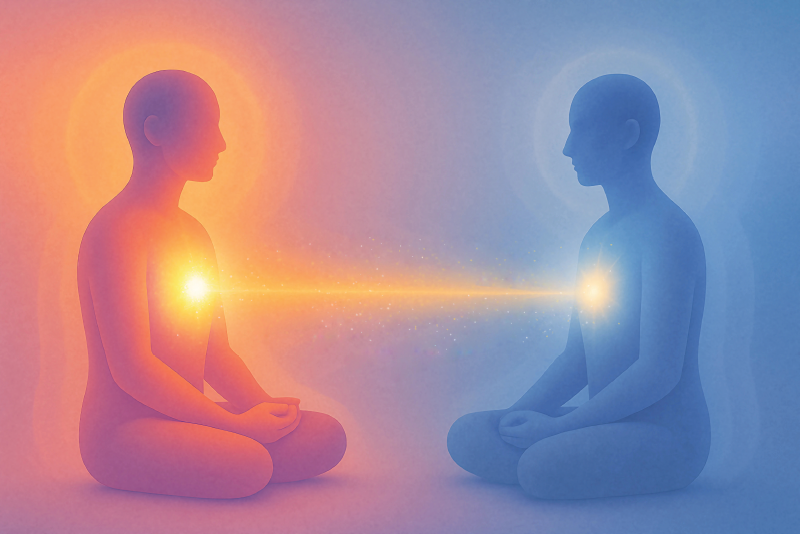
Pranahuti can directly create or bring about
certain spiritual states in the aspirant,
thereby raising their consciousness.
Its effect is a progressive, systematic transformation.
Kesav: And what about shaktipath? As you mentioned earlier, is it also different from pranahuti?
Daaji: This is another process meant to awaken a particular chakra or level of consciousness by having one’s guru touch the person’s body directly. In traditional shaktipath, the guru touches specific points on the disciple’s body. This touch is meant to awaken or activate particular chakras, and sometimes that awakening can be quite dramatic! But pranahuti doesn’t require physical touch or even proximity. It works over any distance and is gentle and gradual. It also focuses on overall spiritual growth rather than just chakra activation.
Apoorva: So pranahuti, prana-pratishtha, and shaktipath all do involve transmission, but the methods of each are very different.
Daaji: Yes, and the results too.
Kesav: Now, where does grace fit into all of this?
Daaji: Grace is different from all other spiritual processes that involve human intermediaries. It is entirely independent of human action and flows only from divine will. This is probably the most important thing to know when practicing spirituality. Grace works on principles that people can’t understand or control. First, divine sovereignty. Grace comes from God’s will alone, not from human effort, ritual, or even transmission. Second, it is beyond demand. One cannot demand, expect, or earn grace. This is why there is a strong taboo in Brahm-vidya [divine knowledge] against expecting the fruits of one’s actions. If we expect results, then we miss the very essence of surrender.
Kesav: Then why practice? If you don’t mind my asking, why not just sit and wait for grace to arrive?
Daaji: Here is another paradox for you. Grace is not something that can be expected or asked for, since it is independent of human action. However, sincere spiritual practice creates the best condition for receptivity. Grace is not an arbitrary thing; it responds to the seeker’s sincerity, surrender, and effort. Spiritual practice is the expression of one’s sincerity. So, grace interacts with personal practice in ways that enhance it. While sincere effort lays the foundation, grace provides the necessary upliftment to go beyond limitations.
Spiritual practice is the expression of one’s sincerity.
So, grace interacts with personal practice in ways that enhance it.
While sincere effort lays the foundation,
grace provides the necessary upliftment
to go beyond limitations.
Apoorva: How can we identify grace when it comes? Sometimes, we are not able to say for sure whether what we experienced in a meditation session was transmission or divine grace.
Daaji: Grace is the love and help that the Divine gives freely, without expecting anything in return. It is not earned through good deeds or rituals, nor is it the result of bargaining or asceticism. Instead, it comes from the abundant love and compassion of God. When you are under the spell of grace, you melt. Even the power of pranahuti is much smaller than grace. There is actually a sort of hierarchy of power, you see: Grace is more subtle than pranahuti, which is subtler than shaktipath, which is subtler than prana-pratishtha. Really, grace can do in an instant what hundreds of pranahuti sessions can do over time. What pranahuti does subtly over long distances through the Master’s will, shaktipath tries to do through direct physical intervention. What all three do internally, prana-pratishtha does externally through rituals that usually have very shallow, short-lived effects.
Grace is the love and help that the Divine gives freely,
without expecting anything in return.
It is not earned through good deeds or rituals,
nor is it the result of bargaining or asceticism.
Instead, it comes from the abundant love
and compassion of God or a realized being.
When you are under the spell of grace, you melt.
Suchit: Knowing these differences must have some impact on our practice now. In the real world, day-to-day practices, I mean.
Daaji: We need to be welcoming of pranahuti with reverential receptivity. Be open and regular, knowing that the Master’s will decides how you progress. And with grace, the keyword is surrender. This means letting go, being grateful when grace touches, and learning to recognize it when it works, even when it’s not so obvious.
Kesav: And where does cleaning fit in with all this?
Daaji: Now this is an important one. The most important, I would say. I have to tell you that pranahuti won’t help you at all without cleaning. Divine energy makes everything stronger. As Babuji said, “Transmit to a thief, and he will become a perfect thief.” So, cleaning gets rid of the unnecessary things while pranahuti builds spiritual qualities. Together, they make a change that works. You can’t have one without the other.
Suchit: So, the combination of cleaning, pranahuti, and grace is the key to spiritual evolution?
Daaji: In essence, spiritual evolution is ultimately circular. From God, through the Master, to the disciple, and back to God, transformed and divinized. The process is complete when the aspirant’s refined consciousness merges back into the divine ocean from which it emerged. Remember, pranahuti is a gift like no other, and even then, it pales in comparison to what a single touch of grace can do. This is what really sets the Sahaj Marg path apart: honoring human effort through practice, seeking the Master’s help through pranahuti, and surrendering completely to divine grace, which can do the impossible.
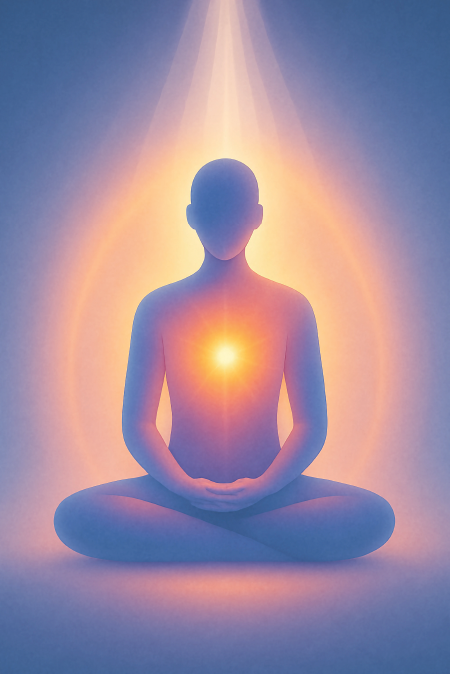
In essence, spiritual evolution is ultimately circular.
From God, through the Master, to the disciple,
and back to God, transformed and divinized.
The process is complete when the aspirant’s
refined consciousness merges back into
the divine ocean from which it emerged.

Daaji
Kamlesh Patel is known to many as Daaji. He is the Heartfulness Guide in a tradition of Yoga meditation that is over 100 years old, overseeing 14,000 certified Heartfulness trainers and many volunteers in over 160 countries. He is an inn... Read More
