The Art of Attention
From Distraction to Presence
ATUL PATEL shows how governing attention, intention, and attitude helps us move from distraction to presence, allowing awareness to shape our experience and action in daily life.
The Fragility of Attention
Each morning brings a flood of notifications, deadlines, messages, and demands. Amidst this constant noise, the ability to focus is both rare and essential—the foundation for living with presence in a world where distraction scatters our energy as the daily norm.
Attention is not just a mental skill; it is the doorway to presence. Directing our awareness helps us connect deeply with ourselves, others, and life. Attention is about choosing where to place the light of consciousness.
Modern neuroscience confirms what ancient wisdom has long taught: where our attention goes, our energy flows. Each time we focus on an object, thought, or feeling, neurons fire and pathways strengthen. Repeated attention on negative emotions reinforces those patterns, shaping habits, and even personality.
When sadness or frustration arises, our attention is automatically drawn to those emotions, feeding them with energy and embedding them more deeply in memory. We feel trapped by moods, situations, and people.
In my experience, Heartfulness practice has repeatedly offered me a way to break this cycle. By withdrawing attention from negativity and gently turning it toward the Source of Light in the heart, I shifted from helplessness to presence within. Transmission, a unique feature of Heartfulness, played a paramount role in this transformation, helping me move effortlessly from distraction to inner stillness. There were times when I was not even able to work on my attention. At those moments of weakness, helplessly sitting with submissive intention invoked the transmission and nudged my attention.

In my experience, Heartfulness practice has
repeatedly offered me a way to break this cycle. By
withdrawing attention from negativity and gently turning
it toward the Source of Light in the heart, I shifted from
helplessness to presence within.
Becoming a Silent Observer
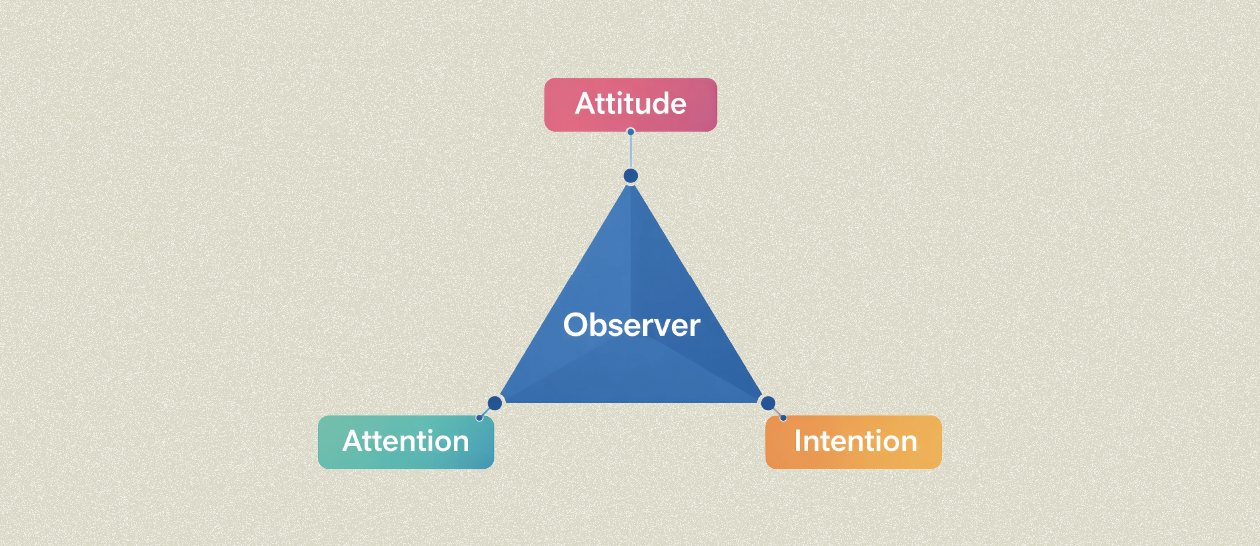
When we think of attention, it is important to be clear that we are cultivating TOTAL attention, including becoming aware of our non-attention. heartful awareness, cultivated by paying attention to the heart, enables total attention, which is not the same thing as concentration. In concentration, there is an exclusion, and our attention narrows. Many people mistake this narrowing for the state of meditation. Instead, by resting our attention in the heart during meditation, we begin to witness ourselves more fully, which can mean observing the chaos and non-orderly existence within ourselves. This act of observing attentively reveals flaws, patterns, prejudices, fears, resentments, and desires. We are face-to-face with our fears. Here, intention and attitude become our allies. With a non-judgmental attitude and the intention to align with the higher aspects of our being, our awareness grows increasingly heartful and expands without limitation. Daaji, the Heartfulness guide, describes it beautifully as “a 360-degree awareness.”
Arriving at a Meditative State
Distractions, desires, and bitter experiences often pull us back, away from presence. Heartfulness Cleaning, practiced at the end of the day, removes these impressions and obstacles. When the chakras become purified, feelings of discontent, unease, and fear fade away, restoring balance.
Meditation increases our capacity for experience, and cleaning enhances our capacity for observation. Together, they settle us in a higher vibratory field, opening the way for deeper transformation. Regular meditation and attentive observation, supported by transmission, lead to meditative awareness. This is the most profound benefit of Heartfulness as it takes meditation out of rooms and into daily life. Now we are LIVING meditation in daily life with a meditative state. In this meditative state, we are heartfully aware. Our efficiency increases, not because we are concentrating, but because we are fully present and focused.

Governance of Attitude
Attention is not something we merely possess; it is something we govern. Each moment offers us a choice: to scatter our awareness across distractions or to gather it into presence. If we choose presence, attention becomes a soft, luminous quality of being.
In Heartfulness meditation, attention leads to the heart. Here, clarity arises, silence deepens, and connection grows. By nurturing daily attention—whether during meditation, conversation, or simple actions—we begin to see life as a whole rather than as fragments. The Grand Master of Heartfulness, Ram Chandra of Fatehgarh (called “Lalaji”), suggested, “Keep vigil on the heart.” This focus gives us heartful awareness. With vigilance, we can pause, choose our response, and make decisions.
In Heartfulness meditation, attention leads to the heart.
Here, clarity arises, silence deepens, and connection grows.
By nurturing daily attention—whether during meditation,
conversation, or simple actions—we begin to see life as a whole
rather than as fragments.
What helps us govern our response? How do we guide intention in the moment? What guiding principles shape our governance framework? When I face this dilemma, reading Daaji’s Users Guide to Living helps me adjust my attitude. It brings attention to heartful, loving presence and guides my intention. This framework is my guide for self-governing attention, intention, and attitude:
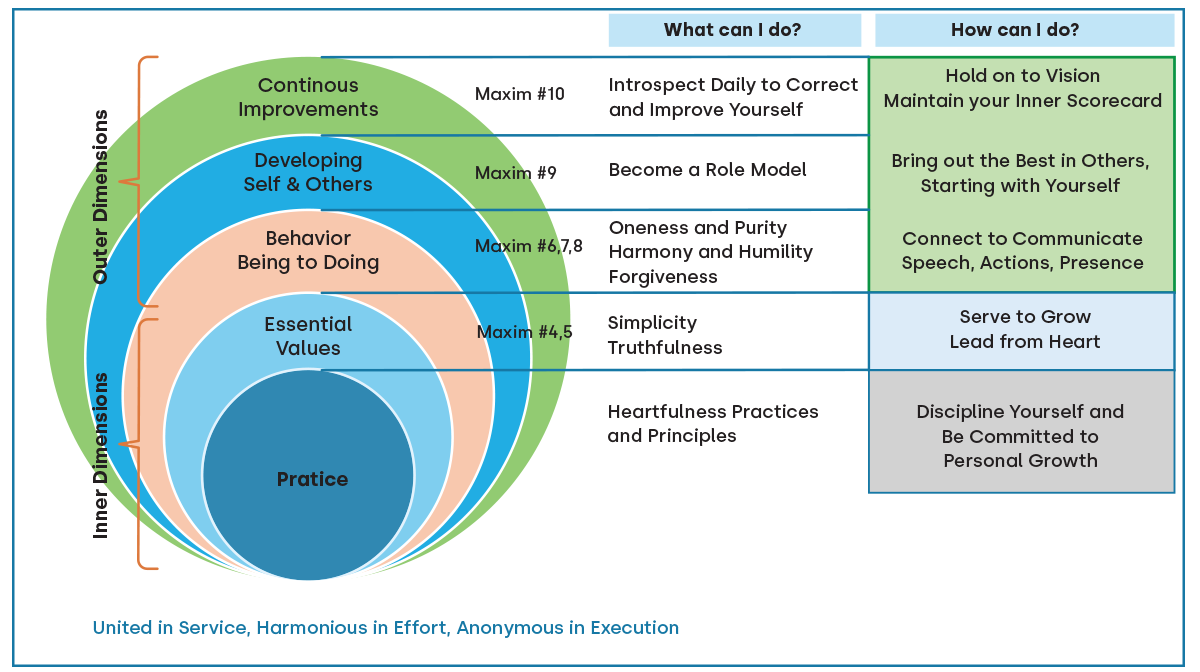
The art of attention is the art of living consciously. It moves us from distraction to presence, from noise to stillness, and from separation to unity. Attention acts as both compass and destination. It guides us back to the heart, where true presence resides.

Atul Patel
Atul Patel has been a Heartfulness Meditation trainer for over fourteen years and has worked at Dominion IT for more than twenty years. An electronics engineer, he focuses on AI and emerging technologies and has contributed to several re... Read More
