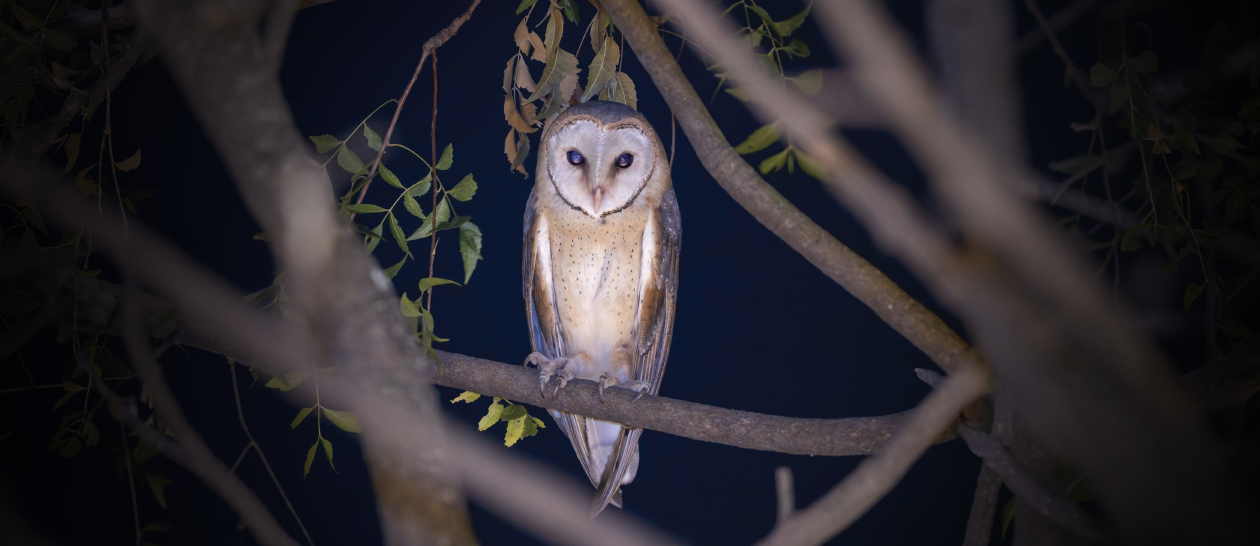
B. RATHINASABAPATHY shows how owls embody conscious living at Kanha Shanti Vanam, serving as silent nocturnal guardians whose precise hunting, cultural symbolism, and ecological balance invite a deeper reverence for coexistence with the natural world.
We may walk the forest by day, but its safety is secured by those who rule the night—the silent hunters whose presence keeps Kanha in harmony.
Silent Keepers of the Forest and Grain
In the quiet hours, when the world retreats into sleep, another realm awakens. At Kanha Shanti Vanam, the presence of owls is both subtle and sacred. They do not announce themselves; they remain largely unseen, yet unmistakable. Barn owls, spotted owlets, and forest-dwelling scops owls have made Kanha their sanctuary, helping maintain the balance between cultivation and wilderness.
The Night Belongs to the Listener
At Kanha Shanti Vanam, the night is not a place of absence; it is a realm of heightened awareness. While the human world withdraws, the forest inhales. Beneath the moonlight, the barn owl sails low over the fields, wings moving without sound. The spotted owlet perches on ancient ficus branches, alert and curious, watching the slightest flicker of movement on the ground. In the deeper wooded patches, the mottled wood owl—a master of camouflage—becomes almost indistinguishable from the bark it rests upon, embodying stillness itself.
To encounter an owl is to enter a world where vision extends beyond sight—guided by precision and instinct. Unlike daytime hunters who chase, owls simply wait. They do not waste energy; they do not pursue unless accuracy is guaranteed. This ecological discipline makes them among nature’s most efficient hunters—and one of humanity’s quietest allies.
Silence itself can be a form of protection. The owl does not need to announce its presence to serve.
Ecological Guardians: A Silent Service to Humanity
Long before the term “pest management” entered human language, owls had already mastered it. A single barn owl family can consume more than 1,500 rats in a year, protecting grain fields and food stores without human intervention. At Kanha, where large swathes of agricultural lands surround the forest, owls play a decisive role in keeping rodent populations naturally under control, reducing the need for harmful chemical poisons.
Unlike daytime hunters who chase,
owls simply wait. They do not waste
energy; they do not engage in pursuit
unless accuracy is guaranteed. This
ecological discipline makes them among
nature’s most efficient hunters—and one of
humanity’s quietest allies.
Modern pesticide use disrupts ecological balance, killing snakes, frogs, lizards, and even birds of prey, while owls offer a completely natural, regenerative solution.
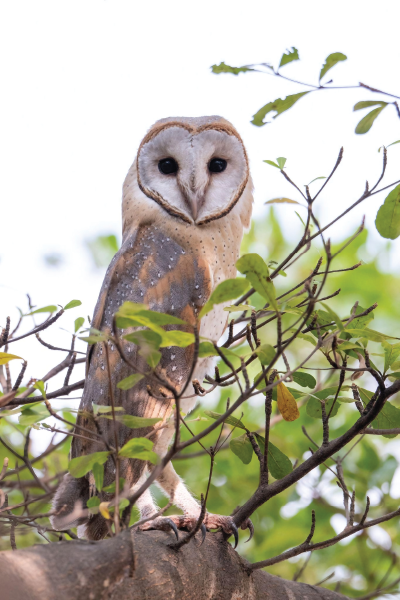
Photo: Aditya Varma
They are living proof that nature’s intelligence precedes human invention. Their impact is not merely biological. It is economic, ecological, and profoundly ethical.
Yet despite this silent service, owls are often misunderstood. Villages across India still associate them with ill omen, while in truth, they are protectors of food, homes, and harvest.
Myths, Mysticism, and the Cultural Memory of Owls
Across civilizations, the owl has carried meaning beyond its physical form. In Greek tradition, the owl is the symbol of Athena, the goddess of wisdom and strategy. In Japanese culture, it is considered a harbinger of good fortune. In many Native American traditions, it is seen as the keeper of ancestral memory, a bridge between seen and unseen worlds.
India, however, carries both reverence and fear toward this night guardian. In the Tantra and Shakta traditions, the barn owl is the vahana [vehicle] of the goddess Lakshmi, representing the one who sees value in darkness—prosperity born of deep insight. Yet folk superstition has sadly recast this sacred symbol as a symbol of perceived misfortune, a profound misunderstanding born of the separation between fear and wisdom.
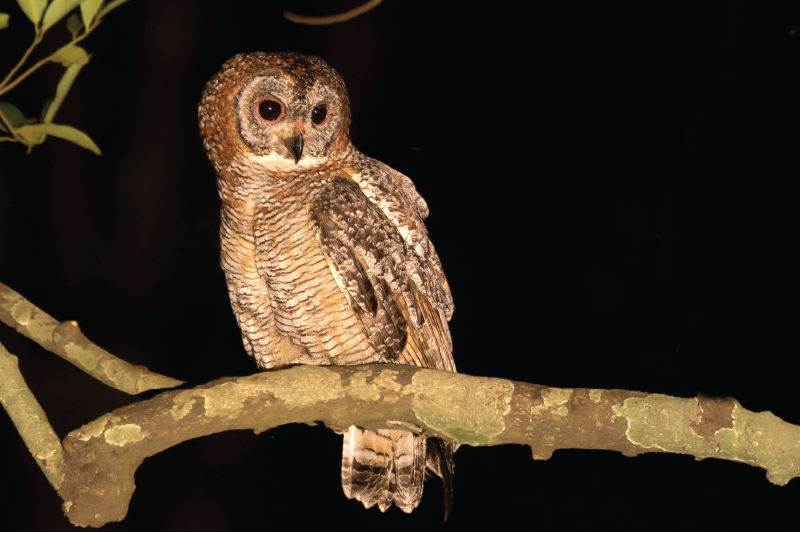
Photo: J. Saravanan
The Jain tradition honors the dawn listener, the one who awakens before the world and knows what others cannot perceive. The owl, in that sense, becomes not a creature of night, but a herald of inner awakening.
A Call to Reverence and Coexistence
To protect owls is to protect the intelligence of the night. At Kanha Shanti Vanam, where ecology and spirituality meet, their presence is essential. They remind us that not every form of service is visible. If we learn from the owl, we begin to understand that true guardianship is silent, subtle, and unwavering. It does not seek recognition, but only balance.
As the world races toward noise, the owl remains a symbol of deep listening—the wisdom to act without aggression, to protect without proclamation. May we offer them safe skies, unpolluted nights, and the dignity of being recognized not as omens, but as partners in the restoration of Earth.
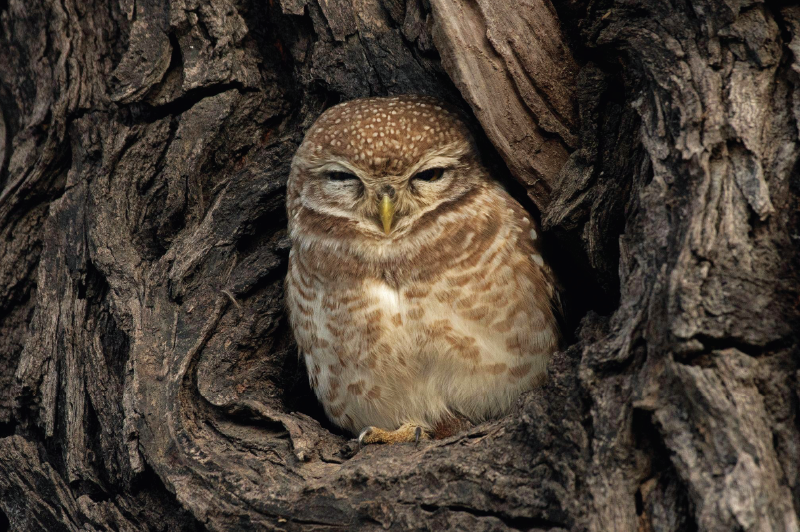
Photo: J. Saravanan
When darkness settles over Kanha, a different world awakens—one shaped by precision and instinct, carried upon silent wings.

B. Rathinasabapathy
B. Rathinasabapathy is an ecologist with 37 years of experience in forest restoration, biodiversity conservation, and environmental education. He has led ecological projects across India, including the Western... Read More
