
In this conversation, infectious disease specialist DR. KUNAL DESAI speaks with homeopath DR. VIJAY about how gut health shapes immunity, emotional balance, and overall well-being, highlighting how simple daily habits—from mindful eating to meditation—can support a healthier inner ecosystem.
Dr. Vijay: In today’s fast-paced world, we often overlook one of the most intelligent systems within us: our gut. Once dismissed as just a digestive organ, it is now hailed as our second brain, housing trillions of microbes that influence our immunity, mood, metabolism, and overall health. To begin, could you explain what gut health is and why it is so important?
Dr. Kunal Desai: As an infectious disease specialist, when I think of gut health, I think of gut microbes—an area we’ve been understanding much better over the last ten to twenty years.
If I take you back in history, all physicians took the Hippocratic Oath. Hippocrates, a physician in the fifth century BCE, famously said that all diseases begin in the gut. For a long time, we didn’t really understand why. Recent research into gut microbes shows that maintaining normal homeostasis is key to many aspects of health.
This includes the lifestyle diseases we see so often today: obesity, diabetes, kidney disease, hypertension, dysregulated immune systems, and cancers. All of these are connected to gut health. Because most diseases we face are now lifestyle-related, the gut is considered an epigenetic gateway: we influence it through our environment, thoughts and actions, emotions, and, of course, diet.
From this broader perspective, gut health is one of the keys to maintaining overall well-being.
V: It’s interesting that you brought up how the gut influences thoughts and emotions. When we think of thoughts and emotions, we usually think of the brain and heart. Can you explain how this gut–brain connection works?
KD: In everyday life, we often describe it as a “gut feeling,” right? For example, before giving a talk or presentation, when we feel anxious, we frequently notice discomfort in our stomachs. My little one will go to the bathroom twice before a tennis tournament. When we feel anxious, something clearly changes in the gut.
Scientifically, we now understand this as the gut–brain axis. Many mental health challenges, such as depression and anxiety, have a documented connection to gut microbes and gut microbial health.
There’s a helpful term here: dysbiosis. When gut homeostasis is disturbed—when there’s an imbalance between healthy and unhealthy microbes—we call it dysbiosis. It’s a subtle process that may not show obvious symptoms, but it’s like something happening behind the scenes.
Dysbiosis leads to imbalances that also affect the brain. We even have that saying, especially among married couples, “A man’s happiness is through his gut”—feed him something good, and he’s happy. It sounds simple, but scientifically, we know that about eighty percent of serotonin is produced in the gut with the help of healthy microbes.
This is one example of how a healthy gut microbiome and hormonal balance influence mental health, mood, and emotions—the essence of the gut–brain axis. It also involves stress hormones, such as steroid hormones. Stress is one of the most common causes of dysbiosis. It is a precursor to many health problems, including mental health issues. The underlying mechanism often goes through this imbalance in gut microbes.
V: Since you’ve opened up the topic of stress, before we dive deeper into it, what symptoms should someone watch for if they’re suffering from an unhealthy gut?
KD: That’s a slightly difficult question because it depends on how narrowly we define gut health. From a simple, gut-focused perspective, you would see digestive symptoms—issues with bowel movements, discomfort, or irregularity.
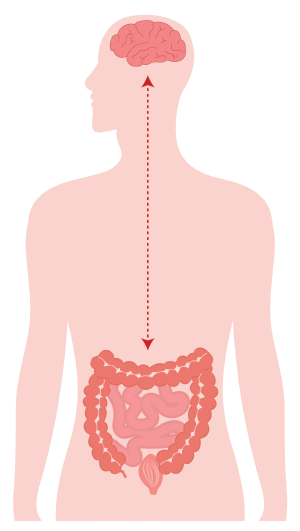
Stress is one of the most common causes of dysbiosis.
It is a precursor to many health problems,
including mental health issues.
The underlying mechanism often goes through
this imbalance in gut microbes.
A common example is irritable bowel syndrome. We still don’t fully understand it, but we know it’s connected to the gut–brain axis and is associated with a person’s mental well-being. IBS is a perfect example of how subtle gut dysbiosis can manifest as symptoms.
V: Does stress affect the balance between these negative and positive microbes in the gut?
KD: Yes, stress is considered one of the most common causes. Before going into the negative side, let me outline what a healthy inner environment for these microbes looks like.
Gut health starts from birth. As you rightly said earlier, we carry more microbial genes than human genes. If there are a million human genes in an individual, there may be around a trillion microbial genes.
Most of these microbes live in the gut, which is why we focus on gut health, though microbes also live on the skin and in the respiratory tract. The key aspects of gut microbes are:
- The balance between healthy and unhealthy microbes, and
- The diversity of those microbes
Even in agriculture, we talk about biodiversity; similarly, in the gut, higher diversity is better. It begins with the mother’s microbial diversity at birth. It is shaped as we grow by our external environment and diet. Different microbes serve different functions, so a richer diversity supports better health.
As we age, both biodiversity and balance decline due to the effects of aging and disease. That’s normal physiology. Anything that disturbs it further can cause trouble.
There are three main reasons for disturbance:
- Stress
- Non-judicious use of antimicrobials—this begins even with how food is grown. Antimicrobial use in agriculture affects soil biodiversity, which in turn affects us.
- Diet—the most critical factor
Stress releases corticosteroids and other stress hormones, which negatively impact the gut microbiome. So yes, stress plays a vital role.
V: That’s interesting. And since you brought up food while addressing that question, what are some top foods you would recommend that support a healthy gut?
KD: There are two aspects. One is the pre-existing environment, and where your food comes from, which is often outside your control. The other is your diet. One major influence is a high-fiber diet. Fiber is food for healthy microbes; we often call it prebiotic. You can also take probiotics—foods containing live microorganisms, usually fermented foods.
Many South Indian foods are fermented. Yogurt is a fermented food; it helps, though it has limitations. So, one aspect is food that provides living microorganisms, such as yogurt, fermented dishes, kefir in the U.S., and so on.
The second, and probably more important, aspect is keeping existing microbes healthy, so they multiply on their own when we feed them the right food: high-fiber foods like salads, vegetables, and fruits.
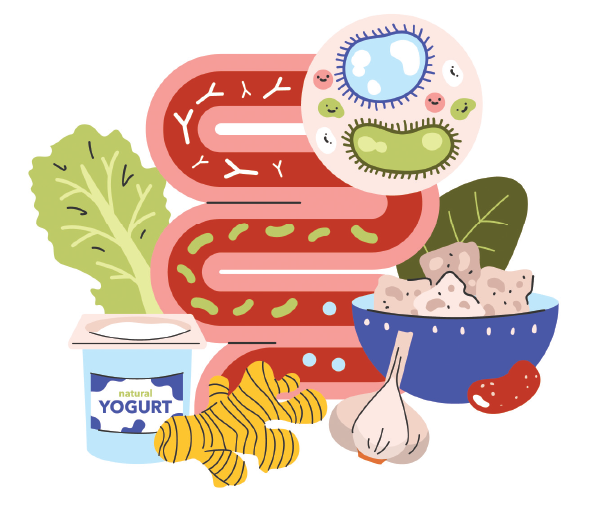
When you look for probiotics, don’t focus only on
the number of organisms listed on the label.
What matters more is the diversity of organisms—
the different strains combined. As I said earlier, diversity is the key,
not just numbers.
I used to primarily advise patients on yogurt or kefir. But as I learned more, I realized a high-fiber diet is the key. If you look at cardiologists’ recommendations for heart health, they also talk about high-fiber diets. One reason is that fiber positively influences the gut microbiome.
V: As you said, over the last few years, terms like prebiotics and probiotics have moved from research labs into our everyday conversations—from yogurt labels to wellness blogs. Beyond the buzz, can you help us understand precisely what prebiotics and probiotics are and how they contribute to our gut health and immunity?
KD: A prebiotic is simply food for these microorganisms, and it usually needs to be rich in fiber. Vegetables and fruits are good examples. Increasing their intake in our diet provides us with prebiotic-rich foods.
Probiotics from food sources are more limited—yogurt and other fermented foods are the main options. There are also probiotic supplements available over the counter or from pharmacies, which are fine if chosen wisely.
When you look for probiotics, don’t focus only on the number of organisms listed on the label. What matters more is the diversity of organisms—the different strains combined. As I said earlier, diversity is the key, not just numbers.
V: That’s interesting! Yes, diversity truly is key. And in a world full of health trends and supplements, it’s often the simple, consistent habits that make the biggest difference—especially for gut health, where everything from how we eat to how we manage stress matters. Our daily routines silently shape our internal ecosystem. What are some simple, practical daily habits one can adopt to maintain a healthy and balanced gut?
KD: I see two main aspects. The first is stress management—anything that influences your state of mind and mental well-being. We know that someone with chronic stress is more likely to consume high-carb, less healthy food. That becomes a vicious cycle.
Suppose we tell someone to exercise moderately, but their mental state isn’t supportive of it. In that case, exercise feels like a burden, and they won’t follow through. So first, we need ways to cultivate good mental well-being.
The second aspect is diet, which we’ve already discussed. In my view, a balanced state of mind naturally leads to a more balanced diet. Then it becomes a virtuous cycle that supports a healthy lifestyle. Everything starts with thoughts and feelings, which then lead to action. If we can regulate our thoughts and feelings, it becomes easier to take the right actions with the right understanding.
Information is widely available today; implementation is the challenge. Simple meditation practices are a first step to regulating the mind. Once that is in place, everything else falls into place more easily.
In my view, a balanced state of mind
naturally leads to a more balanced diet.
Then it becomes a virtuous cycle
that supports a healthy lifestyle.
Everything starts with thoughts and feelings,
which then lead to action.
If we can regulate our thoughts and feelings,
it becomes easier to take the right actions
with the right understanding.
V: It’s fascinating that you brought up meditation and its importance. In recent times, practices like meditation have been linked not just to mental peace but also to physical health, including gut function. The mind and gut seem to be in constant resonance. In your experience, does meditation help the gut feel better or function more smoothly?
KD: Definitely. Let’s think a little outside the box. We live with millions of microbes, and they resonate with our feelings and emotions.
A simple example: depending on my state of mind and inner balance, I see my kids behaving differently. We’ve all noticed that our loved ones respond differently when we ourselves are in a good state of mind. That’s outside of us. Now imagine that when we are poised and balanced, all the cells within us—including microbes—also resonate with that state. I’m sure there is a positive influence.
Some studies have examined vegan or vegetarian diets combined with meditation practices, measuring their impact on gut microbes. Though these studies are difficult—because you must control for many factors, such as diet and environment—the limited studies we have show a positive impact.
During COVID, I had a unique vantage point as both an infectious disease specialist and a medical director for employee health. I worked closely with many healthcare workers during the pandemic. One of my observations was that stressed individuals who acquired the infection often had a worse clinical course; they were much sicker. Those who accepted the situation and stayed calmer seemed to do better.
I wondered why, and later came across studies showing that people with better gut microbial homeostasis did better with COVID. Remember, there was no single drug that reliably worked. Outcomes depended mainly on how an individual’s immune system responded. People with pre-existing dysbiosis, and therefore an unhealthy gut microbiome, tended to have a more dysregulated immune response. Research also showed that the virus presented itself in the gut.
So, if we encounter a disease process in a balanced, calm state of mind, the course of illness can be different compared to when we are anxious and stressed. A simple practice like meditation can change our response to disease! The pandemic gave us a large sample size to observe this.
From these examples, we can see that meditation practices influence immune responses, and gut microbes are central to understanding how that happens.
V: Yes, it certainly does. Thanks for answering that. And that was such a powerful reminder of how a state of mind can directly influence health.
As you rightly pointed out, during the COVID period, those who stayed calm and centered often fared better than those caught in stress and panic. So, it’s a clear reflection of how deeply interconnected our emotional resilience and immune system truly are. Thanks for pointing that out, Dr. Kunal. With this, I think we come to the end. Do you have any closing remarks you’d like to share with us on how we can continue to maintain gut health and, thereby, our mental well-being in the future?
KD: One last thought: the gut is an epigenetic gateway for human health. Genetics are what we inherit from our parents and other factors, but epigenetics—how genes are expressed—is influenced by our habits and lifestyle.

So, if we encounter a disease process
in a balanced, calm state of mind,
the course of illness can be different
compared to when we are anxious and stressed.
A simple practice like meditation
can change our response to disease!
In today’s world, managing daily stress and emotions with a simple heart-based meditation practice can do wonders when applied correctly. It can influence epigenetics.
This reminds me of something Daaji shared about his conversation with Babuji in the Heartfulness tradition: Babuji implied that these practices would influence human genetics. I used to wonder how. Looking at it now, when a simple practice changes our state of mind and being, it influences our epigenetics, and that, in turn, changes our health and well-being.
Thanks for sharing that. It deeply reinforces the importance of not just what we eat, but how we feel and how we live each day. How we take life day by day, how we lead it, is essential in itself. Thank you, Dr. Kunal—your clarity, depth, and practical wisdom have truly helped us look at gut health from a whole new perspective, not just as a medical concept, but as a daily relationship with ourselves. And let’s remember that our gut speaks in whispers, and the more we tune in with conscious eating, mindful habits, and self-care, the more vibrant and resilient our health becomes.
Stay curious, stay kind to your body, and let the microbes work their magic!

Kunal Desai
