AAYUSHI KANSARA shares how one small parenting crisis became an invitation to conscious living—using Heartful Communication, pause, and self-awareness to transform reactive habits into connected family moments.
Parenting is often described as a journey of guiding children—but for me, it quickly became a journey of self-discovery. I found myself repeating old patterns I didn’t know I had—habits picked up long ago. Facing that was humbling and, honestly, a little terrifying.
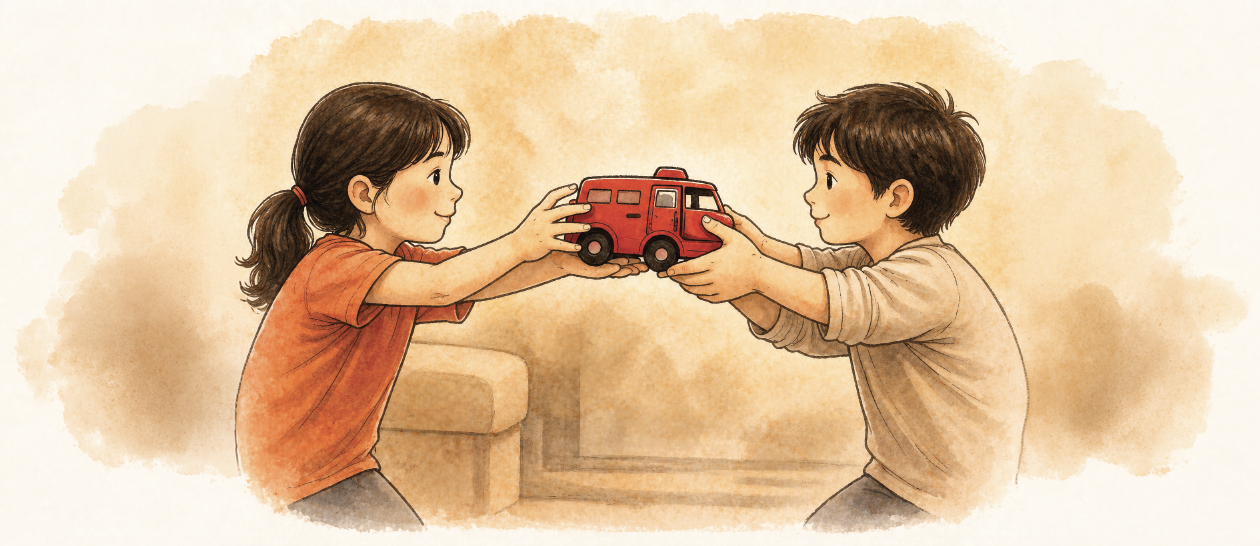
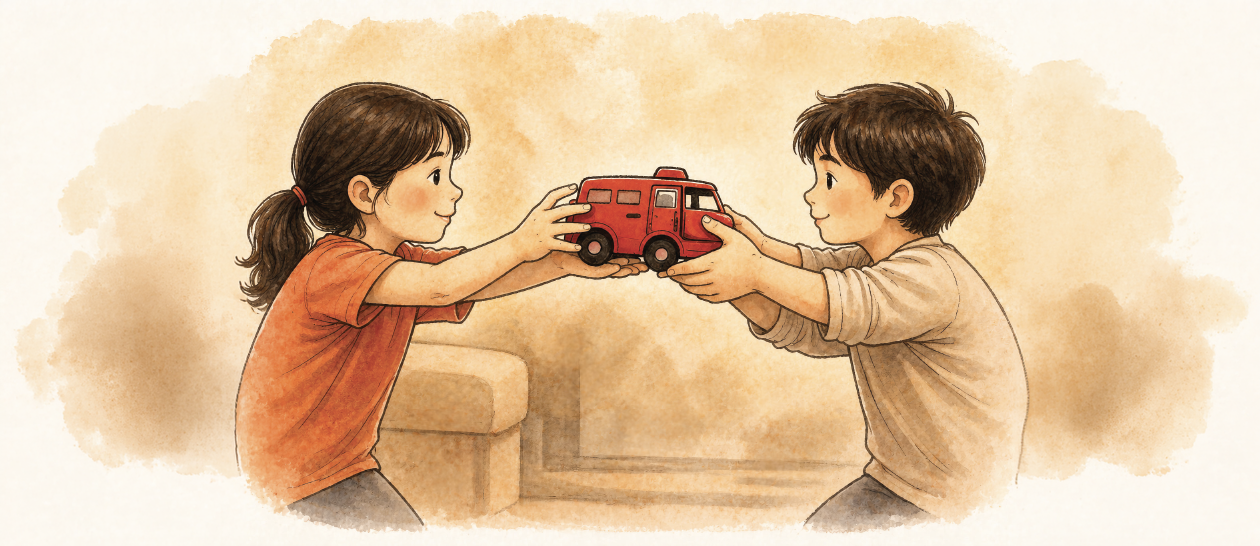
The realization started with a red plastic fire truck. One day, my four-year-old son grabbed it straight out of his older sister’s hands. She let out a high-pitched wail that instantly sent my stress levels soaring. My fix-it instinct kicked in. I wanted to make it right—but mostly, I just wanted the noise to stop. I marched over, took the truck back, and firmly said, “That’s not right! We don’t snatch! Give it back now!”
As I held the truck and looked at my son, I realized I had just repeated the very behavior I wanted him to stop—I had also snatched it. I was asking him to be patient and share while failing to model that behavior myself. In that moment, it was clear my reaction was part of the problem.
Around that time, I was learning Heartful Communication—a practice of connecting with the heart to communicate with empathy and clarity. But standing there with the fire truck in my hand, I wasn’t using it. And yet, something in me noticed. And in the middle of my reaction, I paused.
Pausing was not a pre-planned strategy; rather, it was a spontaneous ceasing of reactivity—a moment of space in which something new could emerge—and in that moment, something did. Instead of continuing to approach the situation with blame, a desire to understand arose. From there, the principles I had learned in Heartful Communication came together in a clear sequence—one that has since become a practice for me:
1. Narrate the Play-by-Play
When things go sideways, my instinct is to judge:
Stop being mean. Don’t snatch. Why can’t you just share?
Instead, I now simply describe what I see. Instead of “Give that back,” I say: “I see you took the truck from your sister. It looks like you really wanted a turn with it.”
This small shift has changed everything. My son, who would normally shut down when corrected, has now started listening. Because I’m not labeling him but only describing the situation, he doesn’t feel attacked. In Heartful Communication, this principle is called “observation.” For me, it simply means slowing down enough to see clearly before acting.
2. Hit the Pause Button
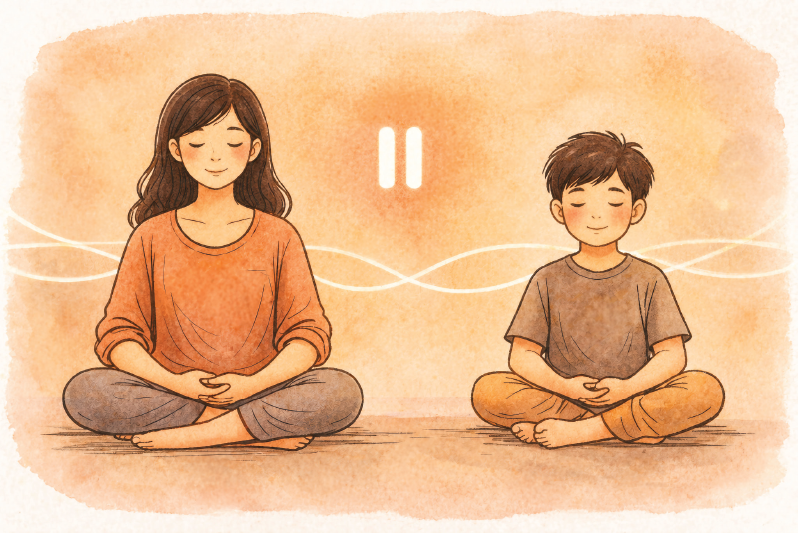
After describing what happened, we both pause. I say, “Let’s put the toys down for a second. Let’s all take a breath together.”
And we actually do it—together. This “pause” is the Heartful Communication principle of “centering.” It helps us all move from a level-ten reaction to something more manageable. You can’t understand what’s happening when everyone is flooded with emotion. The pause gives us a different pair of glasses—a calmer lens.
This step has transformed me the most. It interrupts old patterns before they can take over.
3. Check the Feeling
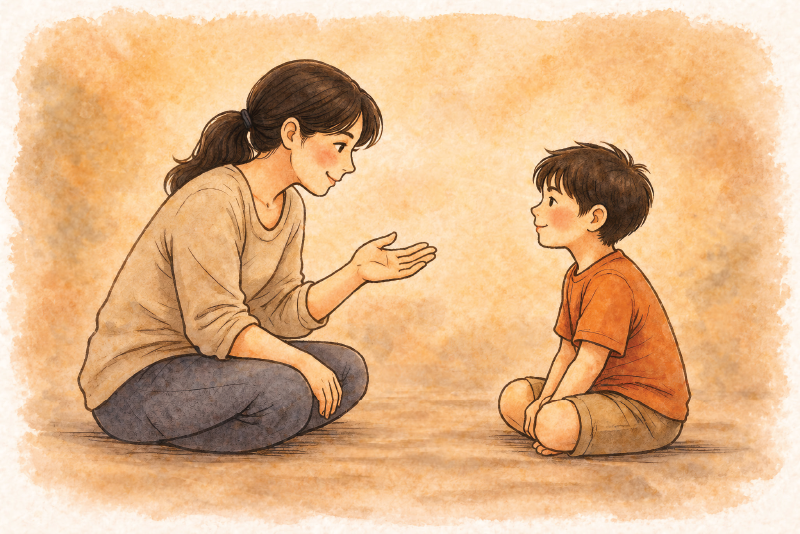
Once all parties are calmer, I start asking questions. At first, I wasn’t sure whether a four-year-old could reflect on feelings. But I asked anyway: “How do you think your sister felt when that happened?” “How did your tummy feel when you grabbed the truck?”
To my surprise, he’d noticed. He’d seen that his sister was sad and realized that grabbing the toy didn’t feel good, even if he wanted it.
That moment was powerful. It reminded me that children are capable of emotional awareness, provided we give them space instead of lectures.
Heartful Communication calls this step the recognition of “feelings and needs.” Over time, we began using a feelings-and-needs list at home. The whole family’s vocabulary is growing. The children have started expressing their big feelings more openly because they’ve learned that they won’t be judged for them.
4. Find a Third Way
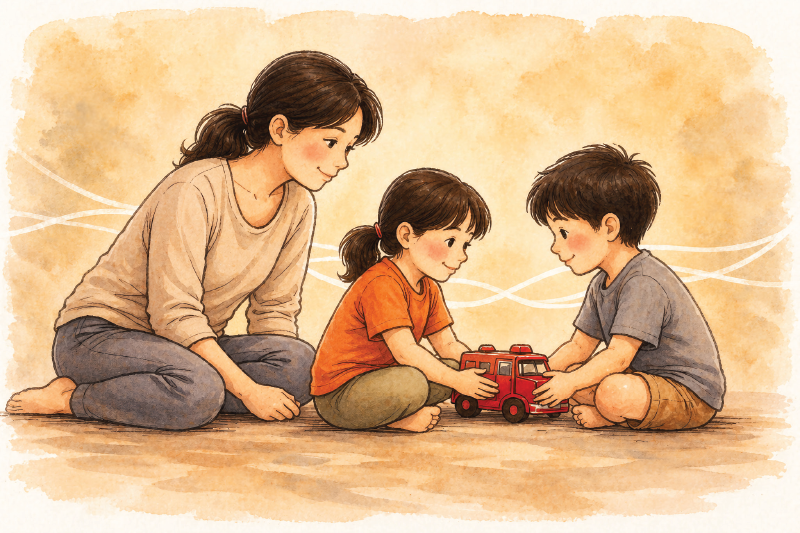
Instead of fixing it for them, I ask: “How can we make this work so everyone is okay?”
Sometimes I even put the toy aside and say, “Let’s figure this out first. How can we all enjoy the fire truck?”
Their solutions—taking turns, trades, setting timers—are often more creative than mine. And because the idea comes from them, they want to follow through. This removes the “right versus wrong” dynamic and lets them take ownership of their actions and solutions. This stage is very close to the Heartful Communication tool of “making a request,” based on one’s identified feelings and needs.
Small Shifts, Real Change
Conflicts aren’t completely gone now, but they are less chaotic. No one feels unfairly treated, and the sense of favoritism I once worried about has slowly begun to fade. More than anything, there’s more openness within the family. Big feelings still come up, but instead of shutting down or blaming, we stay with each other through the harder moments.
However, the biggest shift I’ve noticed has been in me. Breaking old habits hasn’t been easy, and there are still days when I’m tired and feel the urge to take control in the old way. I’ve realized I cannot help my children navigate their big emotions when my own internal state is just as fractured as theirs. My meditation practice has become my anchor, training me to “be the pause” I want to see in them.
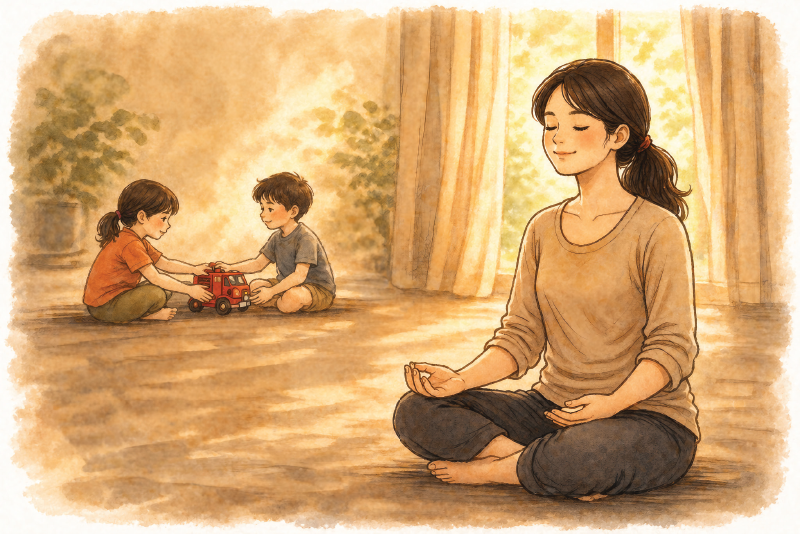
Fundamentally, I’ve learned that parenting isn’t about control—it’s about self-awareness and connection. The ways I respond in small everyday moments set the tone for the whole family. Each time I choose curiosity over urgency, I find our connection becoming stronger.
When tension rises, I now ask myself: Am I truly listening to my feelings, or simply trying to escape discomfort? As life often teaches us, the smallest moments can bring the biggest changes when we are willing to pause and listen.
Learn more about Heartful Communication:
https://heartfulness.org/heartful-communication/
I’ve learned that parenting isn’t about control—it’s about
self-awareness and connection. The ways I respond in small
everyday moments set the tone for the whole family. Each
time I choose curiosity over urgency, I find our
connection becoming stronger.
AI-generated images

Aayushi Kansara
Aayushi Kansara is a physiotherapist, Heartfulness trainer, and mother of two, currently pursuing a Master’s in Counselling Psychology. She integrates meditation, reflective communication, and mindful parentin... Read More
