
Heartfulness Meditation and
the Science of Better Sleep
A clinical study of chronic insomnia explores Heartfulness meditation for better sleep, showing how Heartfulness practices may improve sleep quality, calm the nervous system, and ease emotional burden.
BY DR. JAYARAM THIMMAPURAM
“Sleep is that golden chain that ties health and our bodies together.”
—Thomas Dekker
We live in illuminated cities that never truly darken, surrounded by constant stimulation, digital interruptions, emotional overload, and relentless schedules. Millions lie awake at night staring at ceilings, replaying conversations, worrying about tomorrow, or simply longing for the peace of rest that once came naturally. In fact, sleep has stealthily become one of humanity’s greatest struggles.
Imagine not being able to sleep well for months and sometimes years. Insomnia is no longer an occasional inconvenience. It has become a modern epidemic.
While working with patients with chronic insomnia, my colleagues and I found that night begins with hope and ends with frustration. They may fall asleep only to awaken repeatedly. Others cannot quiet the stream of thoughts racing through the mind. Some wake at three a.m. and never return to sleep again. Over time, we found that their exhaustion spills into every corner of life, emotions become fragile, relationships strain, and even physical health begins to suffer.
Modern medicine has developed numerous treatments for insomnia, yet many remain imperfect. Sleeping pills may provide temporary relief, but they often carry unwanted side effects, dependency risks, morning grogginess, or diminishing effectiveness over time. Cognitive Behavioral Therapy for Insomnia (CBT-I) remains one of the most effective non-pharmacological therapies, but it can be difficult to access, time-intensive, and is associated with high dropout rates.
This growing crisis has led scientists and clinicians to ask an important question:
Can the mind itself learn to rest again naturally?
Our study, published in the Journal of Community Hospital Internal Medicine Perspectives, explored this question through the practice of Heartfulness meditation.1 It is a simple, heart-based meditative system designed to cultivate inner balance, emotional lightness, and mental calmness. The results were remarkable.
The Hidden Burden of Sleeplessness
Chronic insomnia affects approximately ten percent of adults and is especially common among women and older adults. Beyond fatigue, insomnia is closely associated with anxiety, depression, irritability, impaired memory, and reduced work performance. Economically, insomnia costs the United States workforce billions of dollars annually in lost productivity.
Yet insomnia is rarely only about sleep.
Modern neuroscience increasingly recognizes that emotional distress, unresolved mental tension, hyperarousal, and persistent cognitive activity all play major roles in preventing restorative rest. The brain remains “on,” even when the body desperately longs for sleep.
Many insomnia sufferers describe the same paradox:
“I am tired, but I cannot rest.”
This is where meditative practices can be helpful.

Participants gently relaxed their bodies from head to toe,
then rested their attention softly within the heart.
Rather than concentrating forcefully or
trying to suppress thoughts, they learned to
adopt an effortless inward awareness.
Mindfulness-based practices have already demonstrated positive effects on sleep quality. However, the Heartfulness approach adds a unique dimension of not only calming the mind through meditation, but also consciously releasing the emotional burden accumulated throughout the day.
The study enrolled adults suffering from chronic insomnia in an eight-week Heartfulness meditation program combined with sleep hygiene education.
Participants practiced:
- Morning Heartfulness relaxation and meditation
- Evening rejuvenation practices to let go of emotional burdens
- Short bedtime relaxation session
- Weekly guided meditation sessions with a trainer
The meditation itself was beautifully simple.
Participants gently relaxed their bodies from head to toe, then rested their attention softly within the heart. Rather than concentrating forcefully or trying to suppress thoughts, they learned to adopt an effortless inward awareness.
In the evening, participants practiced “cleaning”—imagining stress, emotional heaviness, and mental complexities leaving the system like smoke or vapor, replaced by lightness and purity. At bedtime, they used the Heartfulness relaxation technique and drifted off to sleep, resting their attention in the space of love and compassion within their hearts.
The Heartfulness approach adds a unique dimension
of not only calming the mind through meditation,
but also consciously releasing the emotional burden
accumulated throughout the day.
The study measured outcomes using the Insomnia Severity Index (ISI), a validated clinical tool widely used in sleep medicine.
The average ISI score before the meditation program was 20.9.
After eight weeks of Heartfulness practice, the average score dropped to 10.4.
This represented a statistically significant improvement.
A reduction of more than 8 points on the ISI is generally considered a “marked improvement” clinically. Participants in this study improved by an average of 10.5 points.
For many individuals, this meant the difference between severe insomnia and mild or sub-threshold symptoms. Many individuals reported how they were able to sleep much more deeply and for longer periods. While working with sleep specialists and practicing Heartfulness, many were able to either reduce or stop their sleeping medications. For any medication adjustments, we recommend following the guidance of sleep specialists or medical providers.
While the results were very encouraging, we also explored how Heartfulness could improve sleep.
Science is still uncovering the precise mechanisms, but several possibilities emerge.
Reducing Hyperarousal
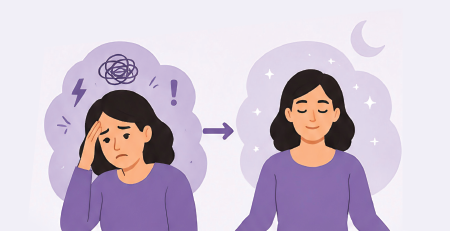
Insomnia is often characterized by excessive mental and emotional activation. The nervous system remains in a heightened state even during bedtime. Heartfulness meditation may help quiet this hypervigilance by shifting the autonomic nervous system toward a state of relaxation.
Emotional Regulation
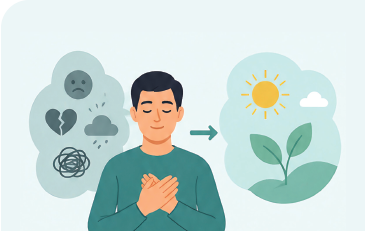
One of the most unique aspects of Heartfulness is rejuvenation. It is an intentional process of letting go of the day's emotional residue.
Modern neuroscience suggests that insomnia sufferers may struggle to downregulate emotional distress effectively. Emotional memories and unresolved mental impressions may remain active during the night.
The rejuvenation practice appears to gently address this emotional carryover.
Creating Inner Safety
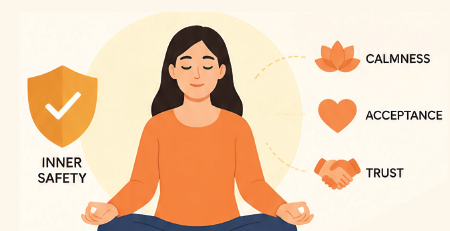
Sleep requires surrender.
The brain must perceive safety before it allows deep rest. Meditation may help cultivate an inner environment of calmness, acceptance, and trust that favors restorative sleep.
Conditioning the Brain Toward Rest
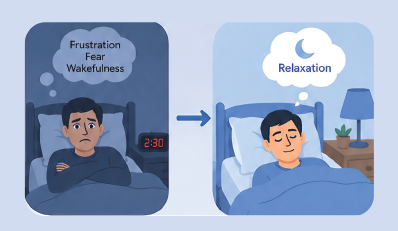
Over time, insomnia itself becomes conditioned. The bed becomes associated with frustration, fear, and wakefulness. Heartfulness practices may gradually retrain the nervous system to associate bedtime with relaxation rather than struggle.
The Heart and Sleep
Ancient traditions have long connected the heart with inner peace and restoration. Modern medicine now recognizes that emotional states profoundly influence sleep architecture, hormonal regulation, inflammation, and autonomic balance.
Perhaps one of the most intriguing aspects of Heartfulness meditation is its emphasis on the heart as the center of attention.
Rather than concentrating solely on the intellect or thoughts, practitioners rest awareness in the heart, often leading to a softer, quieter inner experience.
As the study authors, we feel that Heartfulness meditation is:
- Easy to incorporate into daily life
- Cost-effective
- Free of significant side effects
- Accessible without special equipment
Some limitations included the study's relatively small size, lack of a control group, and inclusion of individuals who voluntarily chose to meditate—factors that future randomized trials should address.
Yet despite these limitations, the findings are deeply encouraging.

In a world increasingly dependent on external solutions, this study reminds us that healing capacities may already exist within human consciousness itself. Sleep is one of nature’s most sacred repair mechanisms. In the silence of the heart, sleep may once again become natural.
FROM HEARTFULNESS RESEARCH
Heartfulness Research studies the effects of meditation from both neuroscientific and qualitative perspectives.
heartfulnessinstitute.org/research/
Reference:
Thimmapuram J, Yommer D, Tudor L, Bell T, Dumitrescu C, Davis R. Heartfulness meditation improves sleep in chronic insomnia. J Community Hosp Intern Med Perspect. 2020;10(1):10-15.

Jayaram Thimmapuram
