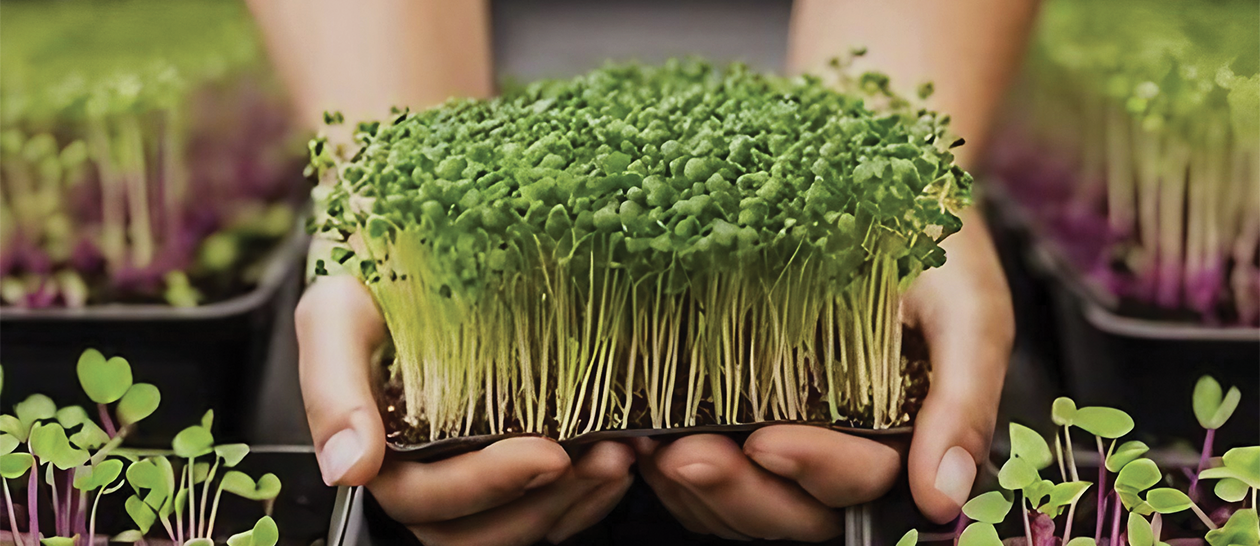
At Kanha Shanti Vanam, a small hydroponic experiment with microgreens became OMG, a school-based initiative helping children reconnect with food, nature, nutrition, and sustainability.
SUCHITH S. SINDHE IN CONVERSATION WITH MAMATA SUBRAMANYAM
Q: Tell me about OMG: What is it and how did it begin?
A: OMG is a young social enterprise working at the intersection of health, nutrition, sustainability, and education. Its mission is simple but urgent: reconnect people, especially children, to food, nature, and healthy living.
The seeds of OMG were planted during the COVID period at Kanha Shanti Vanam, where, under Daaji’s guidance, a small hydroponic growing experiment began on his terrace. At a time when the world was thinking about immunity, resilience, and well-being, Daaji encouraged us to grow fresh, living food locally using modern techniques.
That small experiment became something much bigger. We started cultivating microgreens, which are young, edible greens harvested within seven to fourteen days and packed with intense flavor and exceptionally high in nutrients. These tiny greens can contain significantly higher nutrient concentrations than mature vegetables, all while requiring minimal space and water.
What began as a terrace project soon became a purpose-driven enterprise with a mission to make healthy food accessible, desirable, and educational at scale. That is how OMG was born.
Q: OMG started in Kanha Shanti Vanam—the global headquarters of Heartfulness. Did having Kanha as a starting point help OMG grow into what it is now?
A: Kanha was an ideal ecosystem. It gave us space to experiment, values to build on, and guidance at every stage—a rare combination.
During the pandemic, Daaji would regularly have microgreens with other food and often spoke about the importance of healthy eating. He then encouraged us to grow more and make them available to others in Kanha.
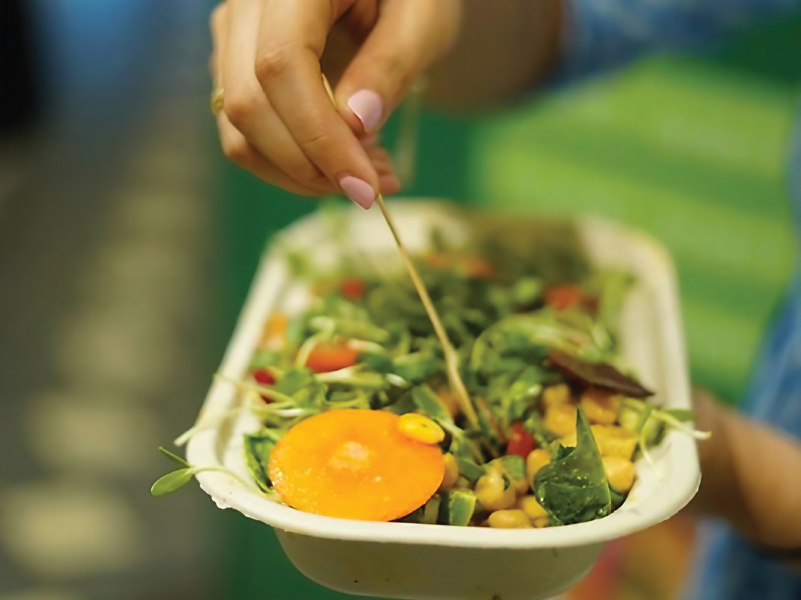
What made the journey special was his attention to detail. One day, during a casual conversation, he said something profound: “People who are health-conscious may eat microgreens raw. But if you want everyone to eat them, you must present them in different forms—juices, salads, attractive meals.” It may sound obvious, but it wasn’t. When we become passionate about something, we often expect others to share our conviction. But Daaji was asking us to meet the world where it already was. I took this as a spiritual instruction disguised as a product insight.
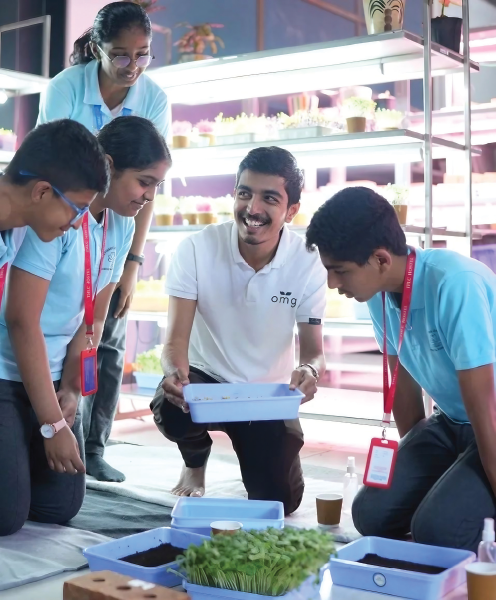
We believe in the importance of combining science,
nutrition, farming, sustainability,
entrepreneurship, and life skills.
Every school should have a space
where children learn how life grows.
The small terrace initiative soon grew into a company. Daaji named it “OMG,” helped shape its logo, and, of course, inspired its vision.
Q: Education is a big part of how OMG creates impact. Can you tell me more about those initiatives?
A: Education became OMG’s natural next step. During the COVID-19 pandemic, some students from the Heartfulness International School were staying on campus. One evening, they were invited for dinner with Daaji. Like many children, most of them preferred pizza and fries. Very few were interested in salads or green juices.
Daaji noticed this and made a comment that inspired our entire approach: “Don’t just serve children healthy food. Involve them in making it.” He asked us not to prepare the salad for them, but to bring the students into the process. Let them wash, cut, mix, taste, and understand what was on their plate. When children participate, their curiosity is sparked, and habits start to change. That insight became the beginning of OMG Labs.
Today, OMG transforms classrooms into living nature labs, where students grow microgreens, learn hydroponics, understand nutrition, and experience sustainability hands-on. They grow, harvest, and eat what they produce. They also learn to care for the environment.
We believe in the importance of combining science, nutrition, farming, sustainability, entrepreneurship, and life skills. Every school should have a space where children learn how life grows.
Q: How is OMG going global?
A: What began as a small initiative inside a school at Kanha is now becoming a movement with global relevance.
OMG started with a simple belief: that when children grow their own food, they better understand health, nature, and responsibility. At Kanha, students learned through hands-on farming of microgreens, connecting nutrition, sustainability, and science in ways textbooks alone could not. They grew food with their own hands, ate what they harvested, and began taking those habits home. Teachers also saw stronger participation because education had become practical and meaningful.
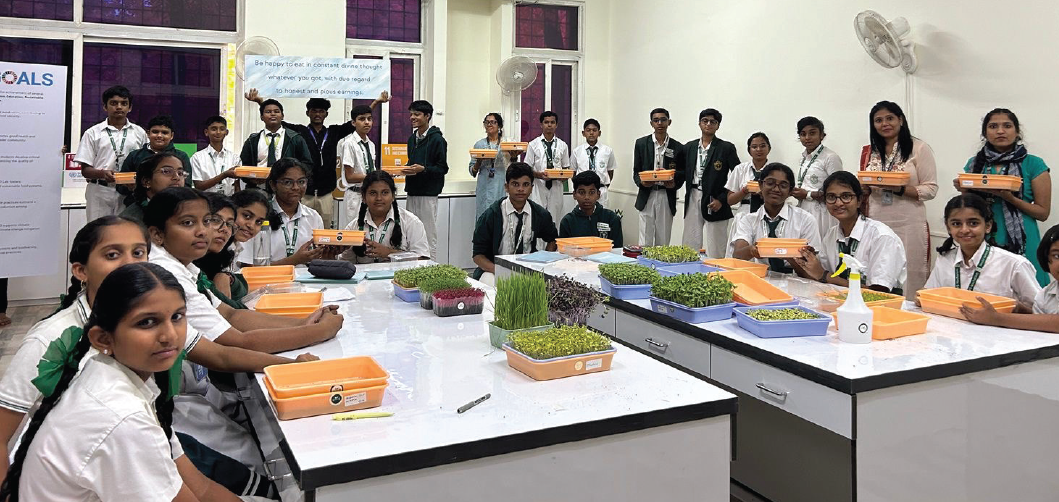
That success pushed OMG to build a structured model for schools. The team developed curriculum-based learning modules and indoor farming labs—OMG Labs—where students learn food systems, climate awareness, science, technology, engineering, and mathematics (STEM), and entrepreneurship through direct experience.
The first major scale-up came in India. OMG partnered with schools and government ecosystems, including an initiative involving 30 Delhi government schools, in which teachers were trained and students were introduced to microgreens education and nutrition.
The work also received public appreciation from national and international leaders. On OMG’s public platform, leaders including Union Education Minister Dharmendra Pradhan, Union Minister Mansukh Mandaviya, AIIMS Director Dr. M. Srinivas, and World Bank Vice President for South Asia Martin Raiser have shared support and appreciation, recognizing the role of nutrition, sustainability, and practical learning for children.
International recognition came in 2025. At the Commonwealth Youth Awards in London, OMG won the Commonwealth Secretary-General’s Special Award. The recognition placed OMG among impactful youth-led initiatives across fifty-six Commonwealth nations for integrating sustainability and climate education into classrooms. Patricia Scotland KC, former Secretary-General of the Commonwealth, publicly praised the initiative, saying sustainability starts in the classroom.
OMG then moved into partnerships. At the United Nations Convention to Combat Desertification (UNCCD) COP16 in Riyadh, OMG signed an international collaboration with Ghana’s Center for Climate and Sustainability Empowerment to bring OMG Labs into schools across Ghana. The focus was on sustainable farming, nutrition, education, and youth empowerment.
OMG has also been represented on global food-systems platforms. OMG was represented at the Food and Agriculture Organization of the United Nations (FAO) in Rome, where we positioned classrooms as living nature labs and linked education with climate, food security, and healthier communities.
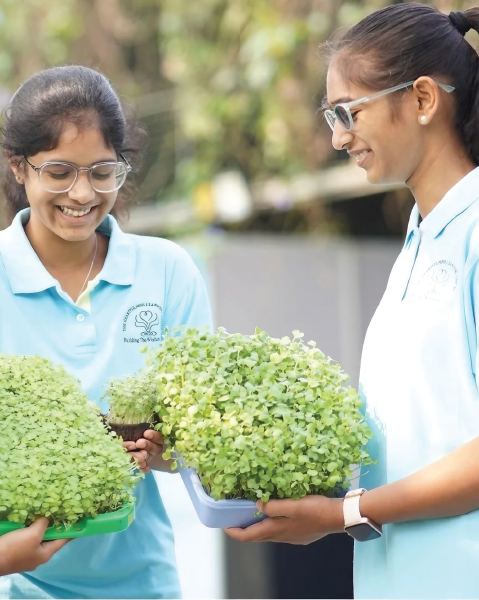
The model also entered communities beyond schools. In Fiji and other Commonwealth contexts, OMG’s training-based approach demonstrated how microgreens can help women, families, and local groups grow nutritious food in small spaces while creating livelihood opportunities.
To support expansion, OMG established a presence in Sydney, Australia, building pathways for partnerships across the Asia-Pacific region.
What makes OMG global is not geography alone. Every country wants healthier children, meaningful education, and sustainable solutions. OMG brings all three together.
Q: Is there a moment or story that—amidst all of the hard work—has made you feel like OMG is fulfilling its purpose?
A: Yes, many moments. But the most meaningful ones are often the smallest, such as when we hear that a child goes home and explains to their parents why greens matter, or that a family starts a balcony garden because their child insisted. When children who once rejected vegetables now proudly serve salads they’ve made themselves, or when students begin saying they want to work in farming, nutrition, or sustainability, we feel that our mission is succeeding.
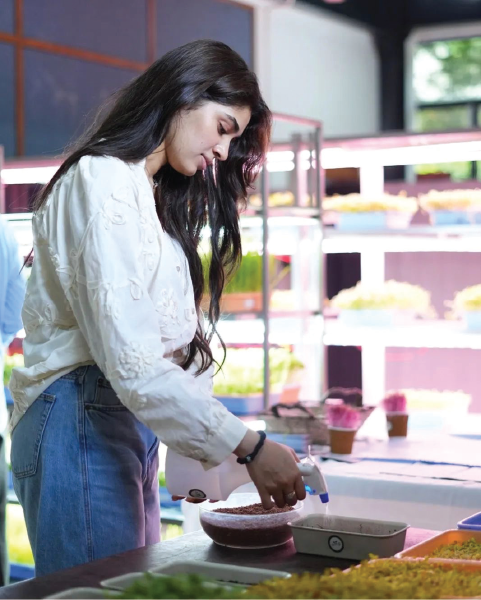
Such moments remind us that real impact isn’t only measured in numbers. It’s when a child changes how a family thinks that we know OMG is fulfilling its purpose.
Q: What’s next?
A: The vision is simple enough to say in one line: OMG in every school.
We believe that the school of the future will have more than classrooms, computers, and sports grounds. It will also have a living food lab—a small corner where children learn how to feed themselves and the world they will inherit.
This next chapter is already visible. We are expanding across government and private schools in India and building partnerships with schools and ministries abroad. We are developing AI-enabled learning, integrating nutrition into school meal programs, supporting student entrepreneurship, and shaping a climate and sustainability curriculum that does not sit on a shelf.
Our hope is that OMG Labs become what science labs became in the last century—essential, unremarkable, expected infrastructure for modern education. The next generation will need more than exam scores. They will need to know how to grow food, nourish themselves, think sustainably, and build resilient communities.
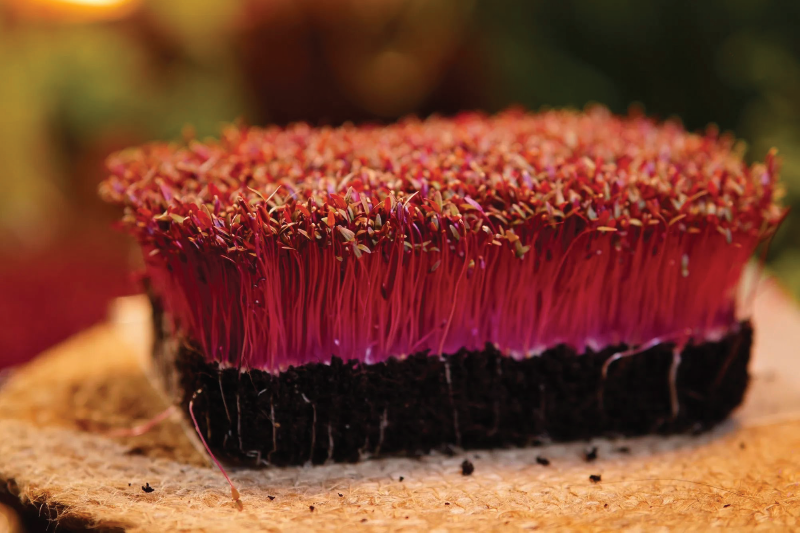
OMG Greens is a sustainability-driven initiative focused on nutrition, education, and practical community impact.
Mamata Subramanyam
Mamata, a long time Heartfulness meditator and trainer, is the social media editor for Heartfulness Ma... Read More
