How Heartfulness Builds an Internal
Locus of Control and Workplace Success
A practical case for Heartfulness as the engine of ownership,
resilience, and performance from RAVI VENKATESAN.
Introduction
In strategic execution and leadership, what separates resilient achievers from those overwhelmed by circumstances is not just skill—it is the lens through which we interpret events. Psychologist Julian Rotter referred to this lens as the locus of control (LoC). “Locus of control” refers to whether people believe that outcomes arise primarily from their own actions (internal locus of control) or from external factors, such as luck, fate, or the influence of powerful others (external locus of control). As I shared in my earlier series, The Heartful Strategist, our inner state shapes the story we tell ourselves—and therefore the options we can perceive and pursue.
Heart-centered meditation nurtures inner steadiness, clarity, and agency.

Destiny x Free Will: Daaji’s Practical Resolution
Many leaders secretly wrestle with a fatalistic question: Is destiny fixed, or do we genuinely have free will? Daaji’s answer is both elegant and operational: Some elements are fixed, but practice expands freedom. Through daily Heartfulness—meditation, cleaning, and prayerful intention—we clear impressions, refine our attention, and align our values with action. In that process, we are no longer only the product of prior causes; we become designers of our destiny. This is the engineering of an internal locus of control.
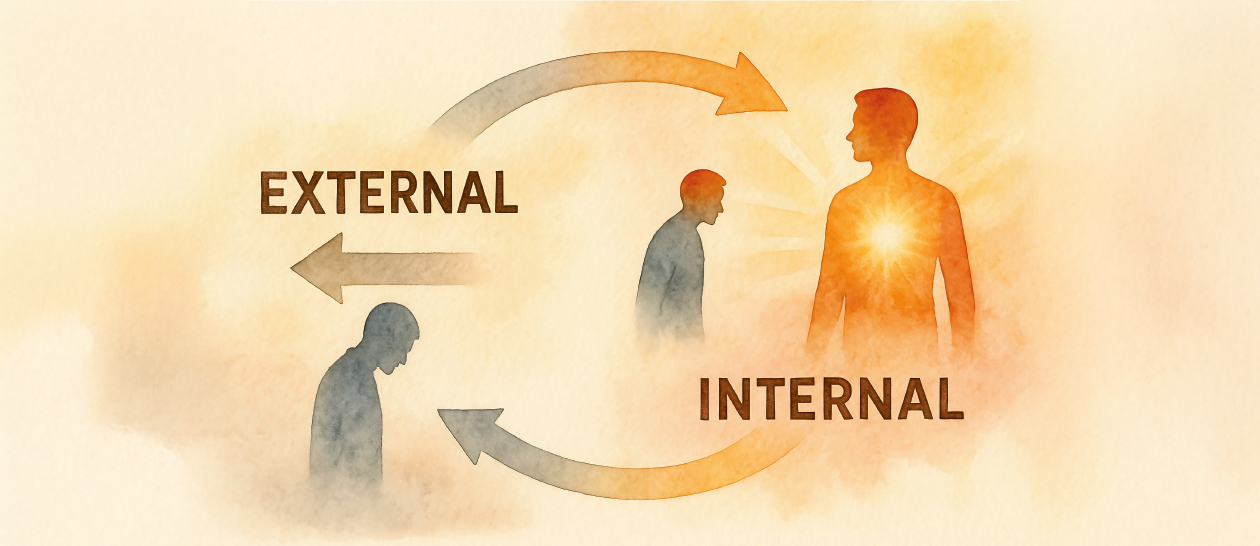
From external to internal locus of control: shifting from “why is this happening to me?” to “what can I influence now?”
The history of leadership offers powerful illustrations of agency under constraint.
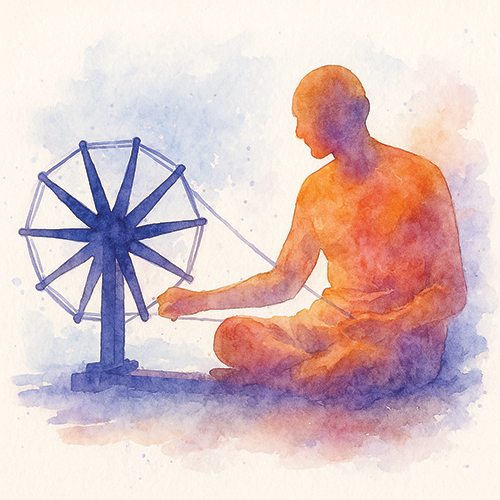
Mahatma Gandhi’s method began with self-mastery. The spinning wheel symbolizes self-reliance and disciplined simplicity. His practice transformed inner steadiness into outer nonviolent power. That is internal locus of control writ large: Master the self, then choose aligned action.
Across 27 years of imprisonment, Nelson Mandela cultivated dignity, forgiveness, and preparation. He chose his response when almost every other choice was removed. The essential act of leadership—owning one’s response—is the essence of an internal locus of control.
How Heartfulness Cultivates Internal Locus of Control
Heartfulness practice changes the inner architecture that precedes every decision:
- Presence and Awareness: Meditation stabilizes attention, allowing us to observe default narratives of blame or helplessness.
- Pause-and-Choose: Inner stillness creates a gap between stimulus and response; agency lives in this gap.
- Value Alignment: The heart clarifies what matters; when choices align with values, we experience ownership rather than victimhood.
- Resilience and Meaning: Cleaning and reflection reduce emotional reactivity; setbacks become data rather than destiny.
- Habitual Rewiring: Repeated practice makes pausing-and-choosing our new default.

Why This Wins at Work
Internal locus of control is not a slogan; it’s a performance system:
- Initiative: Teams stop waiting and start experimenting.
- Learning: Post-mortems focus on controllables and next actions, not blame.
- Speed: Decisions unjam when energy shifts from “who caused this” to “what we will do now.”
- Culture: A leader’s stance becomes the team’s stance—agency scales.
A Leader’s Playbook: Assess → Train → Design → Reinforce
- Assess: Use development tools to map team narratives of control. This is for coaching, not gatekeeping.
- Train: Run attribution workshops to rewrite real setbacks into specific, controllable causes and next-step experiments. Build efficacy through progressive challenges and feedback that highlights behaviors that worked.
- Design: Increase autonomy with clear guardrails, visible metrics, and rapid feedback loops. Make controllables explicit for every OKR (objective and key result).
- Reinforce: Recognize preparation, iteration, and follow-through more than raw outcomes. You get the culture you reward.
In The Heartful Strategist series, I proposed that consciousness flows outward: inner state → strategic choices → consequences → ecosystem. Locus of control is the psychological bridge that operationalizes this flow. When we refine our inner state through Heartfulness, we expand our free will within destiny, step into agency, and create cultures that take ownership.
Conclusion
Heartfulness provides the inner infrastructure for an internal locus of control. It clarifies attention, stabilizes emotion, aligns values, and builds the habit of choice. In a world of volatility, this becomes a durable advantage: leaders who govern their inner state govern their outcomes—and uplift the systems they touch.


Ravi Venkatesan
Ravi lives in Atlanta, Georgia, and is currently the Chief Executive Officer at Cantaloupe. He is also a regular public speaker and public speaking coach. He has been a Heartfulness meditator for over 20 years and is passionate about app... Read More
