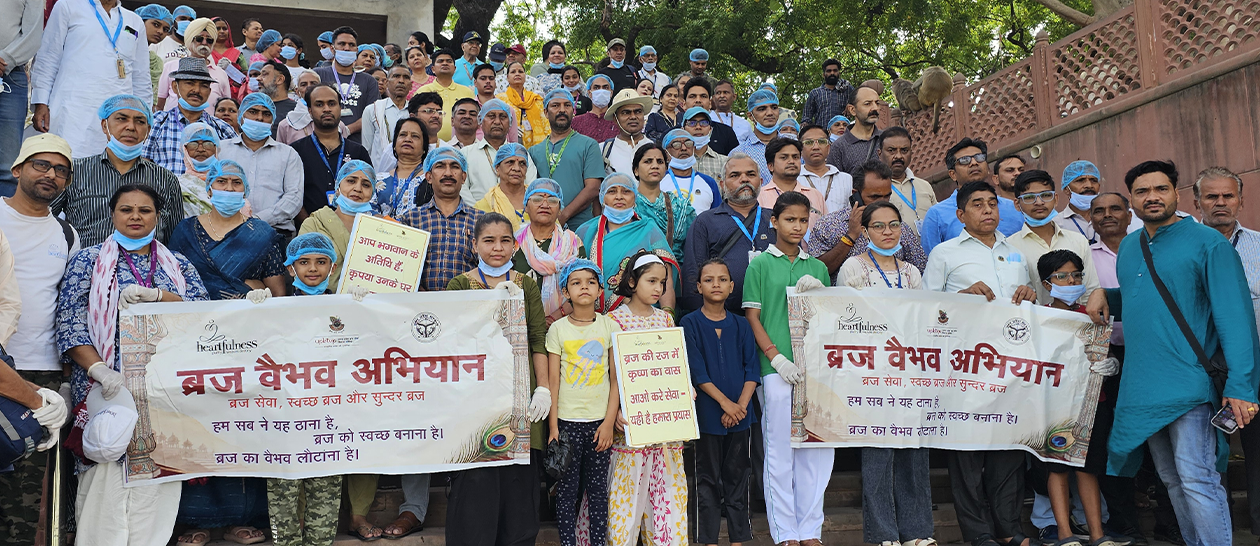
From restoring the sacred landscape to rediscovering the sacred within: DAAJI’s vision for VRAJ VAIBHAV ABHIYAN.
BY EKTA BOUDERLIQUE
In June 2026, I traveled with Daaji through Braj, the sacred region of northern India associated with Krishna’s childhood. I could never have guessed that the journey would give rise to a movement.
Daaji stayed at the Heartfulness ashram in Mathura, only a few meters from the Krishna Janmabhoomi temple. Each morning, temple bells reached us before the full force of the late summer heat. By then, the streets were already filling with pilgrims: families arriving by bus and tractor, barefoot devotees carrying cloth bags, elderly people leaning on relatives, and children asleep in their mothers’ arms, all creating a colorful chaos.
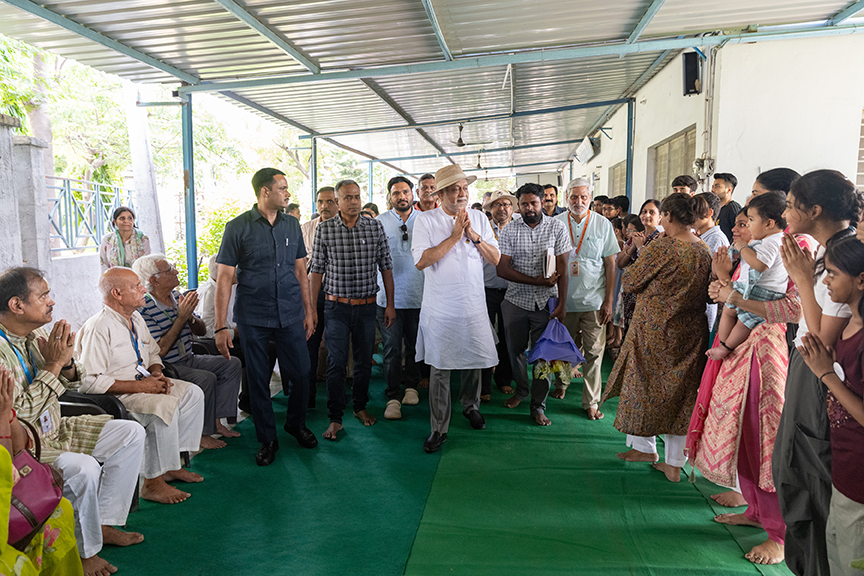
I have traveled with Daaji often enough to recognize the moment when something has seized his attention. He sees both the systemic failures within a situation and the possibility beyond it. In Braj, that perception caused him an unusual sadness. Braj lives in the imagination of millions as the holy landscape where Krishna’s childhood lila [divine play] unfolded. Mathura, Vrindavan, Govardhan, Barsana, Nandgaon, and Gokul form a sacred geography whose hills, forests, kunds [sacred ponds], and pathways have been sanctified by centuries of poetry, pilgrimage, and devotion. Even the dust, known as Braj raj, is revered. Pilgrims stoop to touch it before raising it to their foreheads.
Many pilgrims arrive carrying an idealized vision of Braj. Instead, they encounter a region straining beneath the weight of the devotion it receives each day.
Shortly after sunrise, the roads thicken with endless cars, two-wheelers, and pedestrians. Monkeys leap across rooftops and electrical wires. Traffic presses between pilgrims, animals, and vendors. Loudspeakers compete with horns and temple bells. Families sleep in the open on the pavement. Waste gathers beside roads and water channels. The smell of open sewers, stagnant water, and waste drifts through streets, clashing with the heady mix of spice and temple incense. It hits you hard.
At Govardhan, Daaji observed pilgrims undertaking parikrama [ritual circumambulation] through heat, dust, and traffic. Some walked barefoot. Others performed dandavat parikrama, lying full length upon the road, marking the point reached with their fingertips before rising and beginning again. The journey can continue for days.
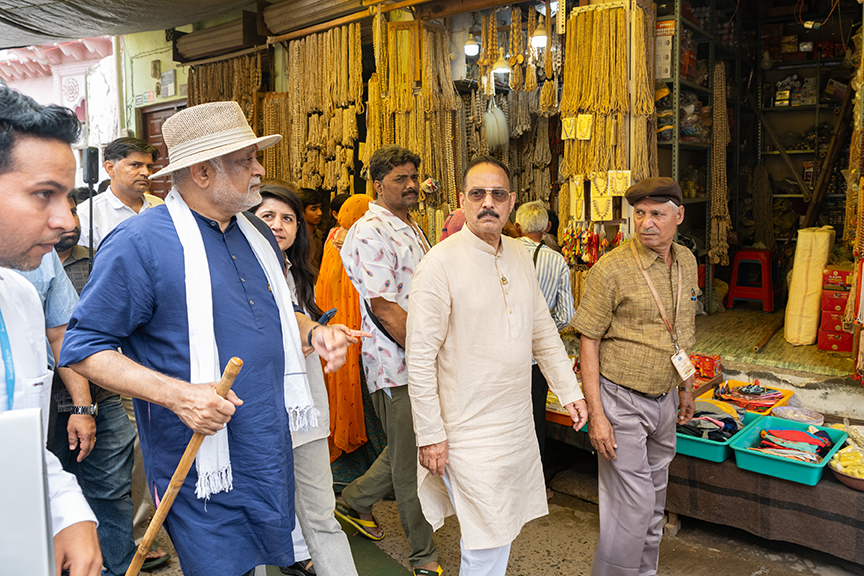
Though their devotion was unmistakable, it was the absence of care around them that moved him.
Where could an elderly pilgrim rest amid the crowd? Was clean drinking water available? How could someone absorbed in prayer remain safe beside moving traffic? Where could a mother wash her child? Who would help the sick or exhausted?
A pilgrimage cannot become an inward journey when its most basic human needs remain unmet. Together with local authorities, we visited several pilgrim facilitation centers. Daaji examined the kitchens, sanitation, sleeping quarters, and drinking-water arrangements. Though established with good intentions, these institutions struggled with management and maintenance.
Daaji’s attention settled on the practical details. Could the kitchens provide three nourishing meals each day? Were the toilets clean and functional? Would families find a safe place to rest? Who would maintain these standards long after the inauguration, when public attention had moved elsewhere?
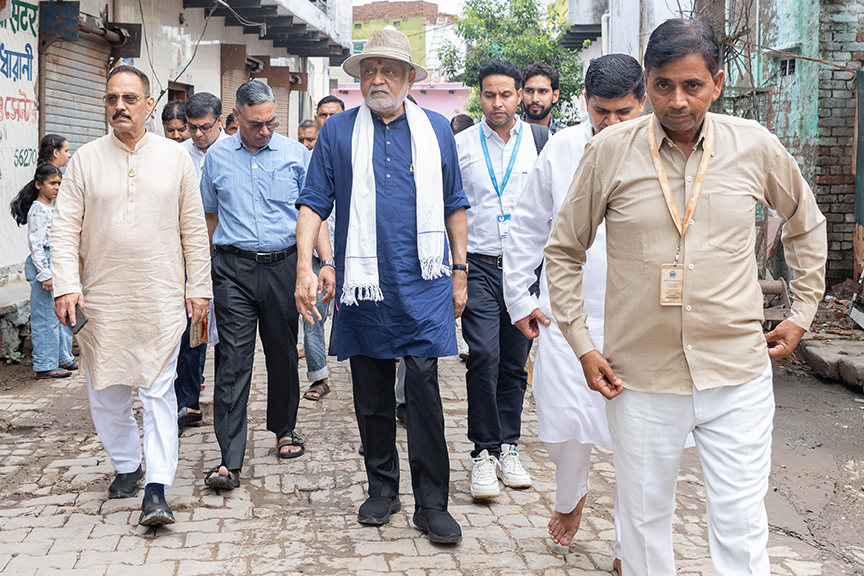
For Daaji, serviceable infrastructure should meet every need, elegantly and simply, as it does at Kanha Shanti Vanam, the Heartfulness Institute’s headquarters.
At Radha Kund, pilgrims approached the water with reverence. Some touched it to their foreheads; others descended the ghats [steps] to bathe. Sacred memory remained alive in every gesture. Yet the water was so polluted that some of us hesitated to even approach its edge.
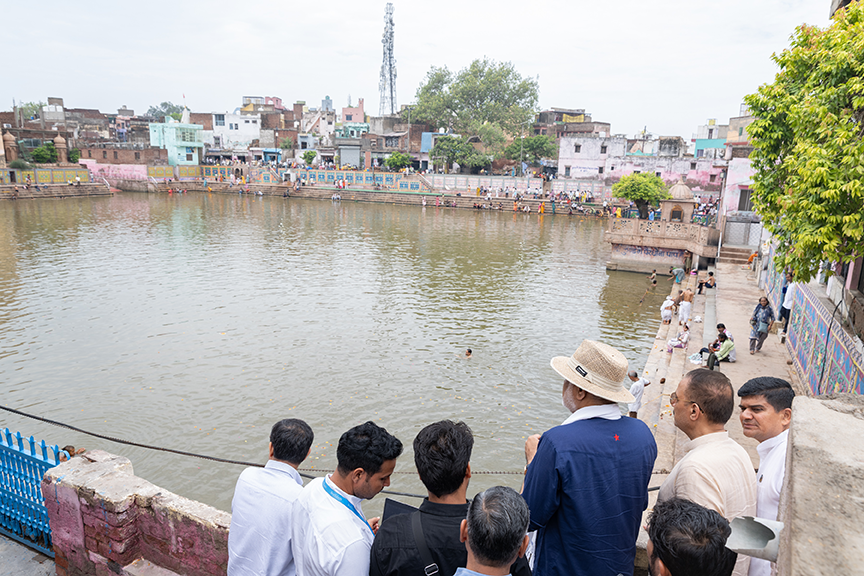
Daaji did not regard the condition of Radha Kund as an isolated failure. He saw at once the larger pattern: polluted water, including the sacred Yamuna River itself, neglected pilgrim routes, inadequate facilities, disappearing green cover, and a sacred landscape being consumed faster than it could recover.
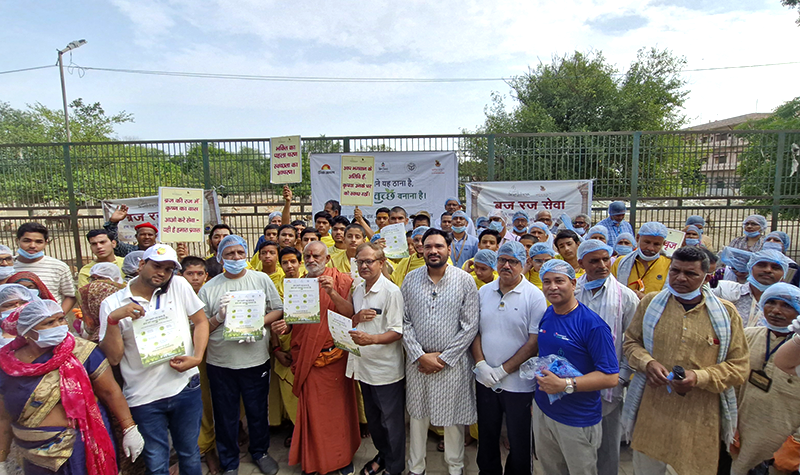
He did not linger over the diagnosis. The moment he grasped the scale of Braj’s decline, his response took the form of action: Vraj Vaibhav Abhiyan, a vast, sustained initiative to restore the region’s water bodies, forests, pilgrim facilities, and sacred ecology.
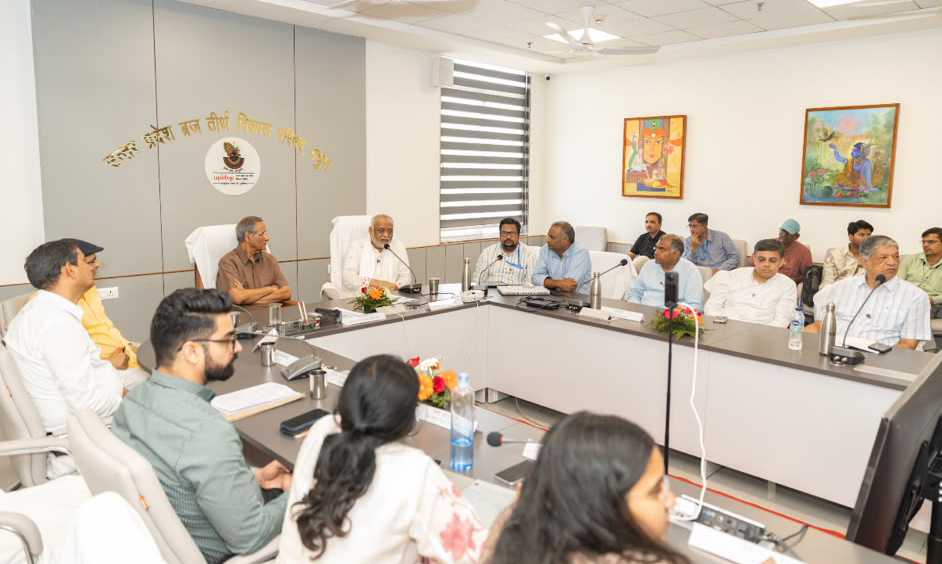
Vraj Vaibhav Abhiyan reaches far beyond restoring a single kund or refurbishing an isolated pilgrim center. Under Daaji’s guidance, it envisages the ecological and cultural renewal of Braj through water restoration, forest revival, native tree planting, improved pilgrim facilities, waste management, institutional cooperation, and the creation of meditation spaces across the region.
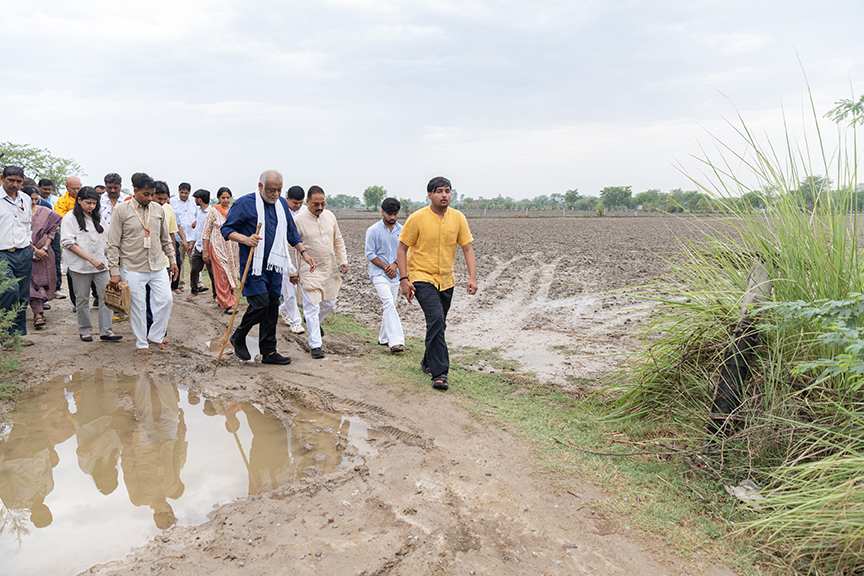
Daaji does not separate meditation from responsibility or spiritual perception from practical work. The inner must find its outward expression. For Daaji, reverence without stewardship is more evident in Braj than any other place in India. The land associated with Krishna now requires organized action in equal measure to the devotion it inspires.
And Braj is buckling under the weight of devotion. Mathura recorded about 90 million visits in 2024, while the Mathura–Vrindavan region still faced a daily sewage-treatment shortfall of roughly 81 million liters. A new plant entered trial operation in March 2026, but infrastructure remains far behind the scale of the pilgrimage.
During his visit, Daaji spoke boldly of the need to revive the fundamental understanding of sacredness. In Vedic times, he said, spiritual life was not centered upon temples, which were erected much later. Instead, people encountered the sacred in fire, water, wind, rain, mountains, and forests. Nature itself revealed the divine presence as it moved through all life, and the inner spiritual practices of that time granted people the sensitivity to sense the interconnected fabric of existence.
After millennia, temple traditions were imposed upon communities as places for collective worship. Over time, the Divine came to be increasingly located within the temple’s inner sanctum, approached through prescribed forms, and encountered at appointed times—all while creating immense fortunes from offerings, which provided the priesthood with a phenomenal income that it still fiercely protects.
Daaji’s consistent effort is to return the seeker to the antaryamin, the indwelling divine presence.
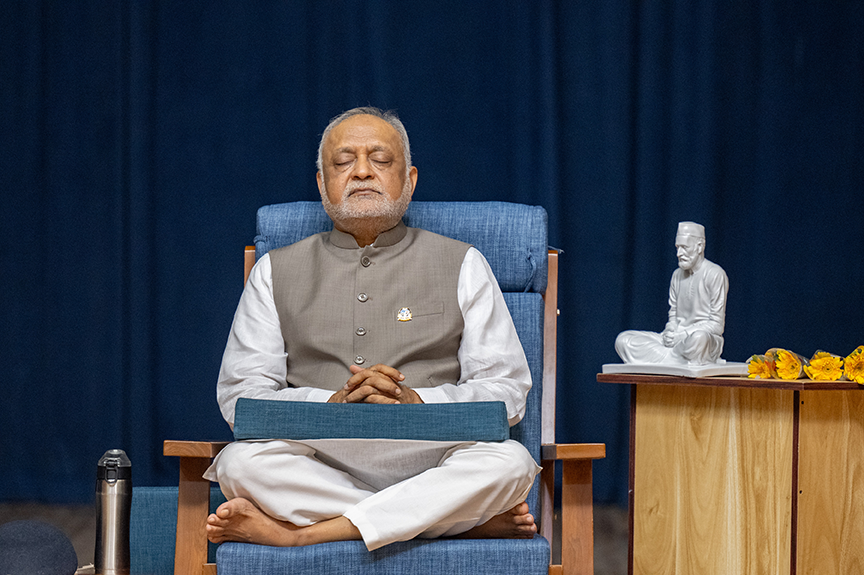
Heartfulness meditation begins with the gentle suggestion that the source of divine light is already present within the heart. As Daaji often says, Krishna has already given us his “address,” declaring:
अहमात्मा गुडाकेश सर्वभूताशयस्थितः ।
अहमादिश्च मध्यं च भूतानामन्त एव च ।।
aham ātmā guḍākeśa sarva-bhūtāśaya-sthitaḥ;
aham ādiś ca madhyaṁ ca bhūtānām anta eva ca
“I am the Self, O Gudakesha, dwelling in the hearts of all beings.
I am the beginning, the middle, and also the end of all beings.”
—Bhagavad Gita 10.20
Krishna identifies himself as the indwelling Self, the antaryamin, present in every heart. Yet we continue traveling from temple to temple in search of the One who has already told us where he resides! Pilgrimage reaches its fulfillment when the outer journey leads to the heart.
Heartfulness practice invites that movement from the very beginning. Rather than beginning with belief alone, it starts with inner experience, from which a new state of being gradually emerges, eventually leading toward the dissolution of the limited self in the Absolute. At first, one meditates upon the divine presence in the heart. Soon, one begins to experience it. With continued practice, the distance between the seeker and the sought begins to diminish. Prayer becomes less a petition and more an offering of the self in joyful surrender. Meditation moves beyond thought, image, and emotion. The heart grows increasingly transparent to a reality that cannot be contained by words. At its highest reaches, spirituality ceases to concern itself with personal desire, accumulated merit, or religious identity. It becomes the refinement—and ultimately the transcendence—of identity itself.
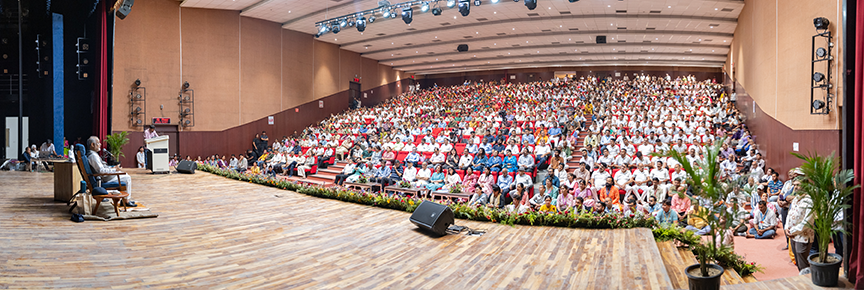
This spiritual horizon gives Daaji’s work in Braj its deeper significance. Clean roads, revived forests, and repaired kunds are essential, yet they remain outward expressions of a more profound movement from possession to surrender, from separation to participation, and from the individual self toward the universal presence.
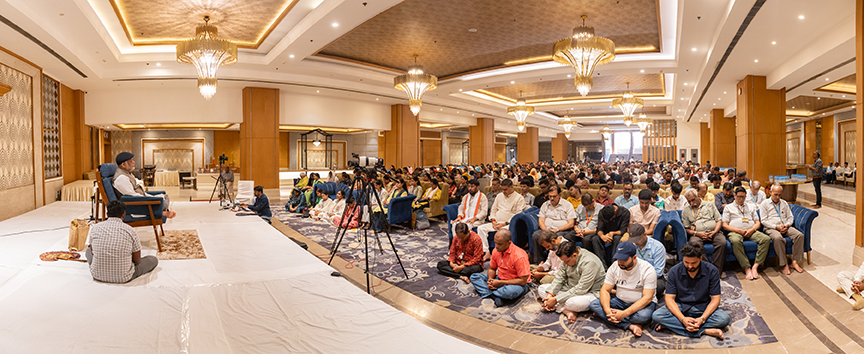
During the visit, Daaji conducted satsang [group meditation] at the samadhi [memorial shrine] of Deoraha Baba, the revered twentieth-century saint, and at other sacred places across Braj. To sit in meditation with him and receive pranahuti [yogic transmission] was to encounter these sites differently.
As I sat with him, I remembered Babuji Maharaj’s account of coming to Braj in 1947, being guided by the great masters to the exact locations associated with Krishna, and sowing the seeds of pranahuti across this sacred landscape. The memory returned with extraordinary force. Nearly eighty years separated the two journeys, yet in that moment, they no longer seemed separate. What Babuji had planted in silence appeared to be stirring again through Daaji as a living current drawing the seeker inward.
Pilgrims often arrive carrying stories of saints, accounts of miracles, inherited reverence, and the accumulated emotion of generations. Meditation redirects that aspiration toward direct experience. The seeker becomes still enough to personally sense the inner charge of a place rather than merely hear about it.
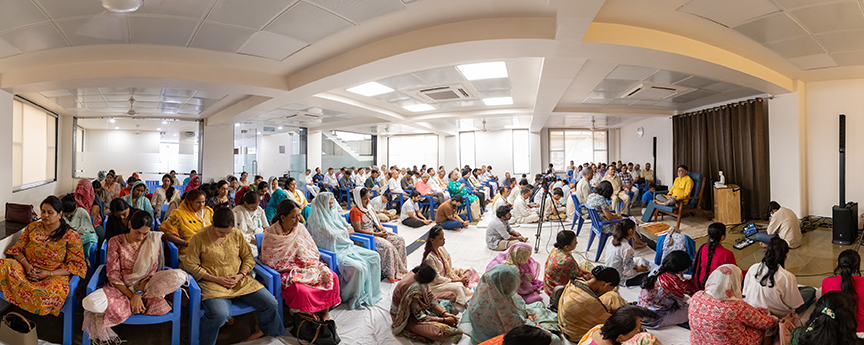
Since Daaji’s visit, meditation has begun at several locations in Braj. This may prove to be among the quietest and most consequential aspects of the entire undertaking, for a sacred place remains alive when it awakens the sacred within those who visit it. Through meditation and pranahuti, aspirants are invited beyond admiration for Krishna and beyond the repetition of his name toward direct inner experience. They are invited to discover Krishna within.
The recognition of the antaryamin also changes our relationship with nature. A pond cannot become a drain, a forest cannot be dismissed as vacant land, an animal cannot be treated as an inconvenience, and pilgrims cannot be allowed to disappear into a crowd without having attended to their needs.
The same presence lives within all.
The restoration of outer Braj begins within.
The impact of sacred places being surrounded by neglect is severe. While Braj could show that an ancient tradition remains capable of offering direct experience, ethical responsibility, and transformation, it could equally repel thoughtful seekers through disorder, commercialization, and the repetition of forms whose meaning has been forgotten.
More than a century ago, Swami Vivekananda courageously carried spirituality into the realms of education and service. He demanded that the Divine be recognized in the poor, the hungry, and the forgotten. Today, Daaji carries that demand into the conditions of the twenty-first century.
Devotion must be expressed as service, which must extend to the pilgrim searching for water, the mother sleeping beside a road, the kund receiving sewage, and the forest disappearing beneath construction. It must include groundwater, biodiversity, public health, transparent administration, and the very consciousness from which human action arises. For Daaji, thought pollution lies at the root of every unfortunate human error from which the planet now suffers.
At the end of one visit, we sat in meditation while Braj continued around us. Traffic moved beyond the walls. Bells rang. Vendors called. Pilgrims continued through the heat.
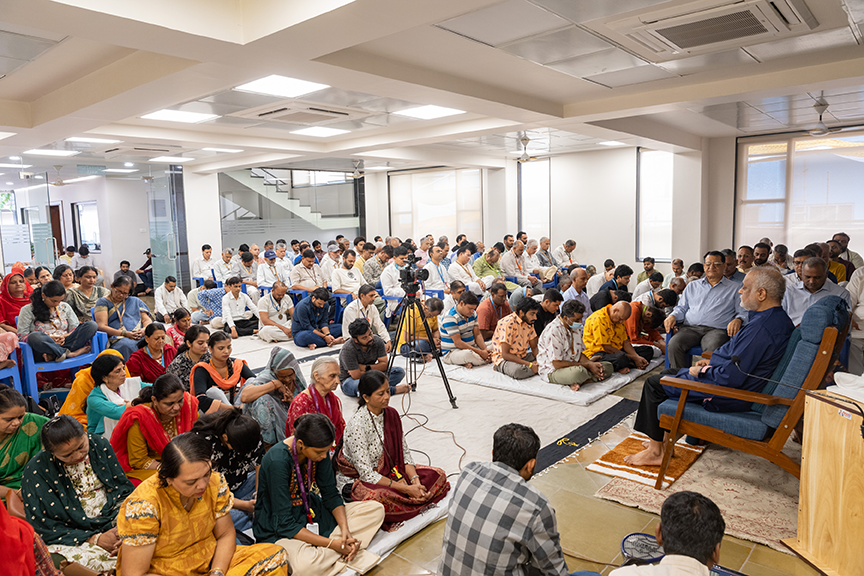
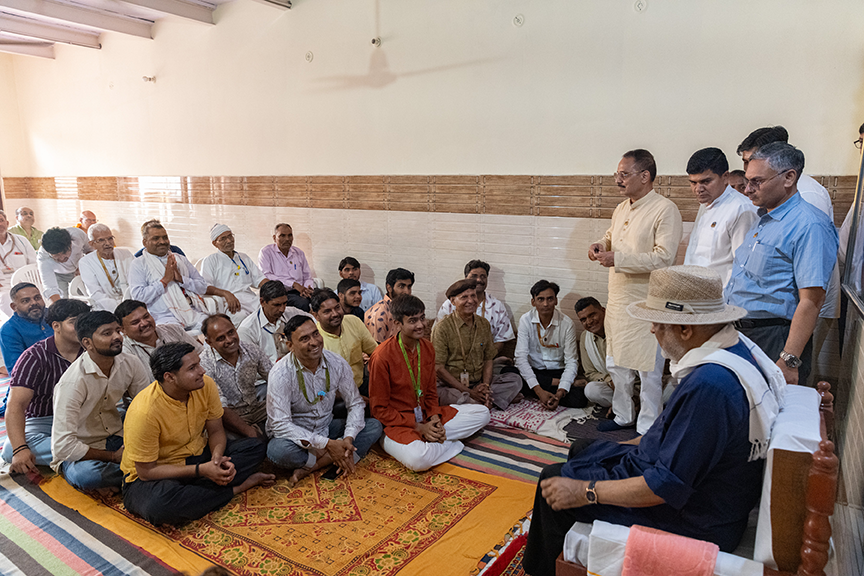
For a while, the outward Braj receded. The Braj within began to emerge.
As our convoy pulled out of Mathura, I found myself reflecting that the future of Braj depends upon devotion finding its fullest expression in transformation. The same devotion that draws millions there must also restore the land, care for the pilgrim, and ultimately lead the seeker to the divine presence within.
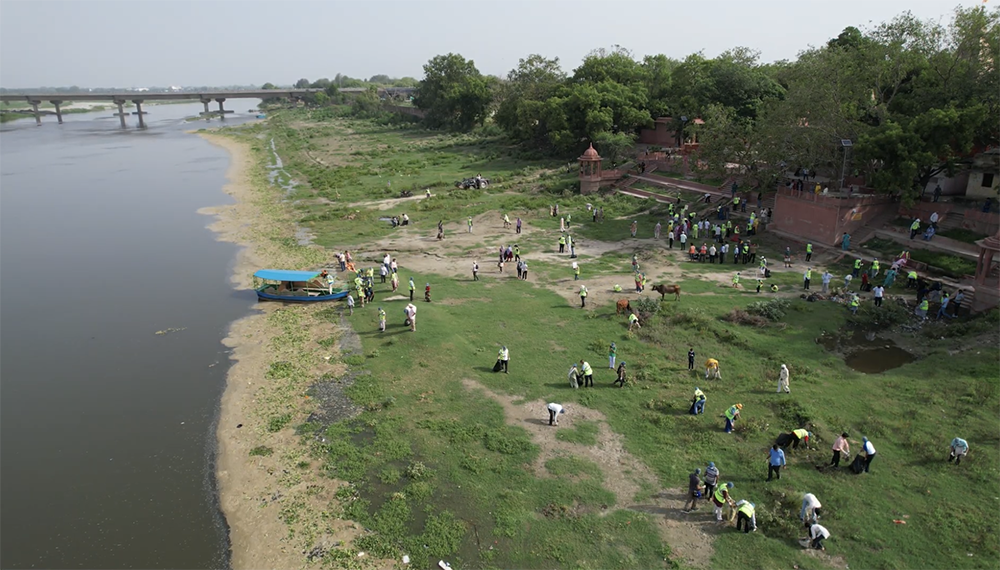
When the kunds become clear, when the land begins to breathe again, when every pilgrim is received with dignity, and when the seeker discovers the Divine as the antaryamin within, the outer Braj and the inner Braj will no longer stand apart but will be realized as one sacred reality.
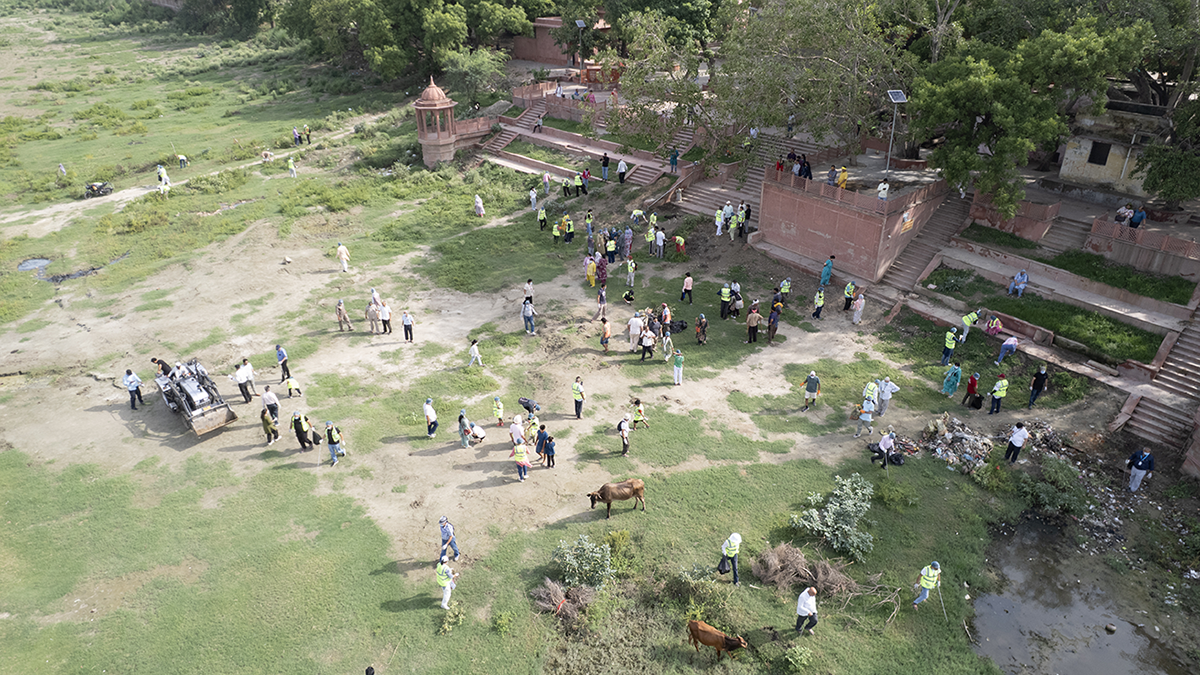
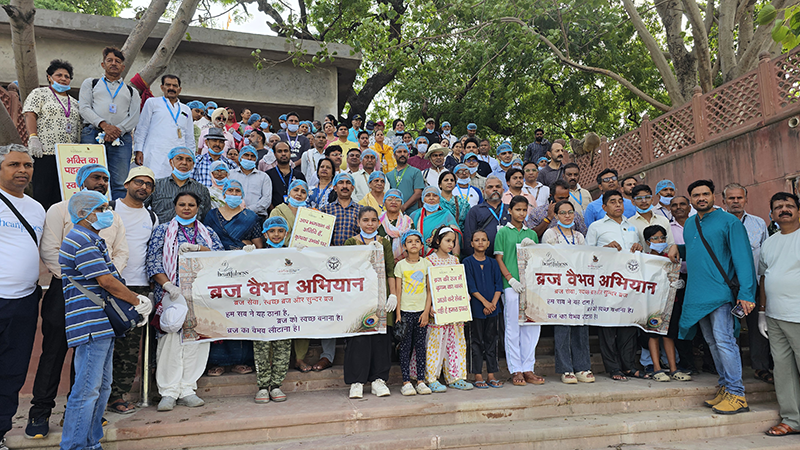
VRAJ VAIBHAV ABHIYAN is dedicated to the ecological, cultural, and spiritual renewal of Braj. It encompasses the restoration of sacred forests, water bodies, pilgrimage infrastructure, and natural heritage, together with long-term stewardship through community participation and service. Learn more, volunteer, or support the initiative at vrajvaibhav.org.

Ekta Bouderlique
Ekta is a therapist and integrative wellness advocate with over three decades of Heartfulness practice and teaching. She leads government relations and regional work for the Heartfulness Institute, heads Energy Medicine at Wellness by He... Read More
